Bento Search Concept Page

Sections
HTML elements

Bento Search

Search all of LSU Libraries in one place. This includes the catalog, research guides, scholarly repository, website, etc.

What does bento search?

Bento searches all of the available resources at LSU Libraries. Please note that while Discovery does include Catalog results, the dedicated Catalog search can still be accessed.

Discovery
Searches our local print and electronic materials including e-books, journal articles, peer-reviewed articles, news, and magazines.
Research Guides
Searches the full-text of research guides published by LSU Libraries. A research guide is a curated, librarian‑built document that pulls together the most important resources for a topic, course, or assignment. It’s designed to help students, faculty, and researchers quickly find high‑quality, relevant information without having to sift through everything on their own.
Scholarly Repository
Searches the full-text of the Scholarly Repository. The LSU Scholarly Repository collects, preserves, publishes, and makes openly accessible the research and scholarship contributed by LSU faculty, staff, students, and units. Research and scholarly archived materials can include articles, monographs, books, theses & dissertations, audio-visual presentations, working papers, technical reports, conference proceedings, special collections, data, and publicly funded research.
Hours
Main Library
Hill Memorial Library
See full hours
First record of Paradilepis scolecina (Rudolphi, 1819) Hsü, 1935 (Cestoda: Gryporhynchidae) in Republic of Korea with notes on ultrastructure and ecological risk in great cormorants, Phalacrocorax carbo sinensis (Staunton, 1796) (Aves: Phalacrocoracidae)
Paradilepis scolecina (Rudolphi, 1819) Hsü, 1935 is a tapeworm widely distributed across the globe that uses piscivorous birds as definitive hosts. Although various piscivorous birds inhabit the Republic of Korea (Korea), this species has not previously been documented in the country. In this study, we report its occurrence in resident great cormorants, Phalacrocorax carbo sinensis (Staunton, 1796), based on integrated morphological, molecular, and ultrastructural analyses. The recovered specimens exhibited 20 rostellar hooks of parvoid type arranged in a double row consistent with the scolecina pattern, allowing distinction from other congeners. Partial LSU sequences of the specimens in this study showed the highest identity to P. scolecina isolates from South Africa and Lithuania (GenBank accession no. MH062156 & PQ570010, 100% identity), while SSU sequences were closest to Paradilepis sp. references (MH699816, 98.1%). Combined BLAST and phylogenetic analyses supported their identification as P. scolecina. Notably, scanning electron microscopy revealed a previously undescribed cirrus surface featuring rose-thorn–shaped spines interspersed with capilliform filitriches—representing the first such ultrastructural description within the family Gryporhynchidae. The shift of Ph. c. sinensis increasing tendency toward year-round residency in Korea may enhance parasite transmission by increasing contact with local freshwater hosts, a hypothesis that warrants further ecological investigation. Additionally, the presence of P. scolecina may have implications for wild fish populations and nearby aquaculture facilities, particularly if intermediate or paratenic hosts include economically important species. These findings contribute to the growing knowledge of the parasite fauna of cormorants in Korea and underscore the need for further research into the transmission dynamics and host range of trophically transmitted cestodes in East Asian freshwater ecosystems.
Using Nuclear-encoded LSU and SSU rDNA Sequences to Identify the Eukaryotic Endosymbiont in Amphisolenia bidentata (Dinophyceae)
The marine dinoflagellate Amphisolenia bidentata possesses complete intracellular symbionts of prokaryotic and eukaryotic origin. This was confirmed ultrastructurally little over 20 years ago when it was showed that the eukaryotic endosymbiont had a nucleus, a chloroplast and mitochondria. We collected Amphisolenia bidentata cells in the Indian Ocean and the identity of the eukaryotic endosymbionts was investigated using both microscopical and molecular methods. Individual specimens of Amphisolenia bidentata were identified by light microscopy and selected for single-cell PCR. Host and endosymbiont nuclear-encoded LSU and SSU rDNA sequences were determined by PCR cloning. Blast searches showed the endosymbiont LSU sequence to have affinity to Pelagophyceae, an algal class within Chromalveolata that also includes dinoflagellates. Since more SSU rDNA sequences from pelagophytes are available we performed a SSU based phylogeny of chromalveolates. The eukaryotic endosymbiont clustered within a clade comprising flagellated and coccoid pelagophytes whereas Amphisolenia bidentata formed a sister taxon to other dinophysioids. Molecular data therefore resolved the endosymbiont in A. bidentata being a pelagophyte and thus identified the ninth novel chloroplast type in dinoflagellates and a new species association. Based on sequence divergence estimates and phylogenetic inference the endosymbiont in A. bidentata likely represents an undescribed genus of pelagophytes.

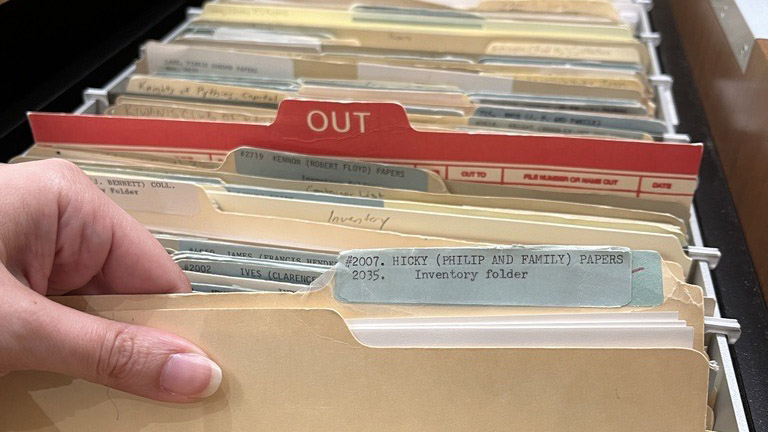
Archive Records

1788
Why does my library account say that I am blocked, that I am barred, or that my status is expired?
Users can encounter several different types of status messages. Patrons with questions about their account status can visit the checkout desk in room 241 of LSU Library and ask to speak to a staff member. Alternatively, patrons can reach out to us via e-mail at libcirc@lsu.edu (mailto:libcirc@lsu.edu) . When contacting us via e-mail, LSU students, staff, and faculty should message us from their LSU e-mail address; public patrons should message us from the e-mail address we have on file. For privacy reasons, we cannot discuss the details of patron accounts over the telephone. Expired: Students must be currently enrolled in classes in order to be granted library privileges. Once they graduate, or if they fail to register on time in accord with the deadlines posted on LSUs academic calendar, their privileges expire. If they try to log in to their library account after that date, they will see an alert message informing them that their account has expired. Graduate students who have received a masters degree but are continuing on to get their PhD may also have their privileges expire earlier than expected. The library receives weekly updates on student status from the Registrars Office. Once the semester has begun, if students register during the week, their accounts will not be updated and their privileges extended in the system until the following Monday morning. Blocked: Users with overdue recalled books will have their accounts blocked by the system. Their accounts will remain blocked until the book is returned. The system will not permit staff members to override blocks or to renew books that have been recalled. The only way to remove a block from an account is to return the materials. Barred: Users can be barred from using library materials for a number of reasons, the most common being that they have been billed for lost items. They can also be barred if they resign from the university, if their classes are purged, or for flagrant violations of library policy. If they try to log into their account after they have been barred, they will receive an alert message that tells them that they have been barred. Answered by: Access Services Staff

Gear

44

Staff

101
Ask Us
AskUs Homepage
Hidden Tiles
expand
Tile Cover
laptop and books
Accounts listing
expand
Tile Cover
People troubleshooting on a computer
Ask Us
Service
Tile Short Summary
Check our FAQs, submit a question using our form, or launch the chat widget to find help.