From the Stacks: Julia Irwin
LSU Libraries celebrates the research and creativity of LSU faculty through "From the Stacks: LSU Faculty Authors," a monthly Q&A series highlighting recent books written by LSU faculty members. This initiative highlights recent publications, offering insight into the scholarship that shapes the university’s academic community. All faculty-authored books are included in the Libraries’ physical collection and as part of the faculty book list in the LSU Scholarly Repository.
Julia Irwin
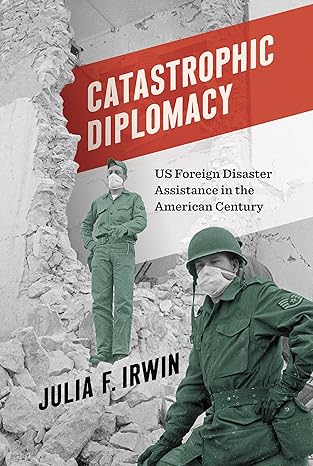
Julia Irwin is LSU’s T. Harry Williams Professor of History. Her book, Catastrophic Diplomacy: US Foreign Disaster Assistance in the American Century (University of North Carolina Press 2024), offers a sweeping history of US foreign disaster assistance, highlighting its centrality to twentieth-century US foreign relations.
Tell us about your field of study and what attracted you to it?
I study twentieth century US foreign relations, global history, and international humanitarianism. In addition to having an interest in world affairs, I have long been fascinated by medicine and health, and studying humanitarian aid allows me to combine both interests.
Tell us about your education and work history.
I earned my Bachelor of Arts in history from Oberlin College and my PhD in history from Yale University. After graduating, I taught at the University of South Florida for thirteen years, then moved to LSU in 2023.
Does writing come easily to you, or is it a struggle?
Writing is hard!! Getting ideas to sound good on paper takes time and hard work. When I write, it generally requires multiple rounds of revision before I am satisfied.
What drew you to the specific subject of your book? What do you want readers to take away from your book?
While researching my first book (on US humanitarian aid during the First World War), I stumbled across many accounts of US assistance to countries affected by other disasters. I wanted to understand the motivations behind US international disaster relief. I hope that readers come away from my book understanding the political and strategic rationales that have historically underpinned foreign aid, but also the very sincere moral and humane aims that guide most practitioners in the field.
Do you have a writing routine? How long did it take to research/write your book?
I prefer having long blocks of time so I can get into the mental headspace for writing. My book took me roughly a decade to research, write, revise, and publish.
Are you envisioning a follow-up?
My next book is on a related topic, surveying major trends in the history of international humanitarianism over the past 300 years.
What authors or works have inspired your writing?
I believe it is essential to read fiction alongside scholarship. Reading how talented novelists craft imaginary worlds and scenarios, and learning from their prose and narrative style, can help make academic writing more engaging!
Do you have any advice for others in your field who may desire to write a book?
Researching and writing a book is a long-term commitment, so you should choose a topic that you care about and want to think about for many years. If you find yourself getting bored of the topic rather quickly, find something else to study!
Anything at all you’d like to add about yourself?
My hobbies are traveling and cooking (and eating!), so one of my favorite parts of my job is getting to visit interesting places for my research. For Catastrophic Diplomacy, I conducted archival research in many US cities, as well as in Geneva, Rome, and London. I treasure those experiences—but I’m always happy to come back home to Baton Rouge.
LSU Libraries supports faculty authors by collecting and preserving their work in the LSU Scholarly Repository and by helping make LSU research more widely discoverable through open-access initiatives.