Bento Search Concept Page

Sections
HTML elements

Bento Search

Search all of LSU Libraries in one place. This includes the catalog, research guides, scholarly repository, website, etc.

What does bento search?

Bento searches all of the available resources at LSU Libraries. Please note that while Discovery does include Catalog results, the dedicated Catalog search can still be accessed.

Discovery
Searches our local print and electronic materials including e-books, journal articles, peer-reviewed articles, news, and magazines.
Research Guides
Searches the full-text of research guides published by LSU Libraries. A research guide is a curated, librarian‑built document that pulls together the most important resources for a topic, course, or assignment. It’s designed to help students, faculty, and researchers quickly find high‑quality, relevant information without having to sift through everything on their own.
Scholarly Repository
Searches the full-text of the Scholarly Repository. The LSU Scholarly Repository collects, preserves, publishes, and makes openly accessible the research and scholarship contributed by LSU faculty, staff, students, and units. Research and scholarly archived materials can include articles, monographs, books, theses & dissertations, audio-visual presentations, working papers, technical reports, conference proceedings, special collections, data, and publicly funded research.
Hours
Main Library
Hill Memorial Library
See full hours
Phylogenetic relationships of the family Gryporhynchidae (Cestoda: Cyclophyllidea) inferred through SSU and LSU rDNA sequences
Tapeworms of the family Gryporhynchidae are endoparasites of fish-eating birds distributed worldwide. Currently the family contains 16 genera classified on the basis of the morphology of the rostellar apparatus, rostellar hooks and strobilar anatomy. However, the phylogenetic relationships among the genera are still unknown. In this study, sequences of the near complete 18S (SSU) and 28S (LSU) from rDNA of 13 species of gryporhynchids (adult specimens) representing eight genera (Cyclustera, Dendrouterina, Glossocercus, Gryporhynchidae gen. sp., Neovalipora, Paradilepis, Parvitaenia, Valipora) and one species of metacestode from fish (Neovalipora) were generated. Additionally, sequences of metacestodes of the genera Amirthalingamia, Neogryporhynchus, Paradilepis, Parvitaenia and Valipora from Africa recently added to the GenBank database were analysed. Phylogenetic relationships were inferred using maximum-likelihood (ML) and Bayesian inference of each (SSU and LSU) dataset. The phylogenetic analyses indicated that the family Gryporhynchidae is a well-supported monophyletic group within the Cyclophyllidea. The trees inferred with SSU and LSU datasets had similar topologies and suggested that the genera Glossocercus (two species sequenced) and Paradilepis (four spp.) are monophyletic. In contrast, Dendrouterina, Parvitaenia and Valipora are paraphyletic, suggesting that the species composition of these genera should be critically reviewed. Interestingly, species of the genera that use the same groups of definitive hosts such as herons (Ardeidae), cormorants (Phalacrocoracidae) and ibis (Threskiornithidae) are together in the phylogenetic tree, even though they differ markedly from each other in some morphological characters, especially shape and size of rostellar hooks.
Comparison of rDNA regions (ITS, LSU, and SSU) of some Aspergillus, Penicillium, and Talaromyces spp.
Aspergillus, Penicillium, and Talaromyces spp. are commonly found worldwide and include industrially and medicinally important members. These genera are deeply related with life from soil to health hazards via their industrial products, surface proteins, biodiversity, food spoilage, mycotoxins, etc. These three genera progressively encounter important taxonomic revisions, such as the one fungus-one name concept, and various methods are available to establish their evolutionary and phylogenetic relationships. Besides morphological, microscopic, and extrolite analyses, nucleotide sequence analysis is the most preferred method. In particular, rDNA regions, such as the internal transcribed spacer (ITS), large subunit (LSU), and small subunit (SSU), are commonly used for taxonomic and phylogenetic studies. Although the ITS locus is accepted as the barcode gene for fungal identification, it has some limitations. Therefore, the aim of the present study was to compare ITS, LSU, and SSU loci in terms of ease of application, discrimination of species, and phylogeny by using 43 strains belonging to the above-mentioned three genera of fungi. The results indicated that the ITS and LSU loci were the most effective, exhibiting identical topology and species discrimination, while the SSU locus was the least effective, demonstrating lower species discrimination and the worst topology. Furthermore, the long and high-quality ITS, LSU, and SSU sequences obtained in the present study, which belong to the above-mentioned three genera of fungi, have been deposited in the NCBI database. [ABSTRACT FROM AUTHOR]
Genome-wide analysis of response to low sulfur (LSU) genes in grass species and expression profiling of model grass species Brachypodium distachyon under S deficiency.
Sulfur (S) affects the plant life cycle and crop yield and has nutritional importance for human and animal diet. Its deficiency is one of the major problems in agriculture. However, the plant-specific LSU (response to Low SUlfur) gene family has not been extensively analyzed in major plant species such as grasses. In this study, we have performed in silico genome-wide analysis of LSU genes in 6 grass species, including Brachypodium distachyon, Sorghum bicolor, Oryza sativa, Zea mays, Triticum aestivum, and Panicum virgatum. All identified LSU genes contained one exon encoding proteins of acidic character with cytoplasmic localization. In silico analysis of ciselements revealed that sulfur-responsive elements (SURE boxes, SUlfur Response Element, GAGAC motif) were present in all LSU genes. In phylogenetic analysis, dicot and monocot LSU genes were separated. Expression profiles of B. distachyon BdLSU1 and BdLSU2 genes were analyzed by qRT-PCR method. Two Brachypodium LSU genes demonstrated different expression patterns when subjected to 48 h of S-depletion treatment. In roots, the BdLSU2 gene was upregulated, while BdLSU1 was downregulated. In leaves, expression levels were decreased for both genes. Analysis of the BdLSU expression under drought, cold, salt, and heat stresses was carried out based on the Brachypodium stress atlas. Results showed that BdLSU genes are not specific to S limitation; indeed, they may be involved in different stress conditions by cooperating with their interacting partner proteins. The results of this study could significantly contribute to the understanding of LSU genes in plants, particularly in grass species. These results may also support plant molecular studies by aiding the understanding of the sulfur assimilation pathway. [ABSTRACT FROM AUTHOR]
Processed vs unprocessed collection--what's the difference?
A processed collection has gone through several steps to become a cataloged record, thus available to the researching public. Those steps include a thorough vetting of copyright and restrictions, a verbatim transcription or thorough indexing of the interview including time-stamped calibration, the opportunity for the interviewee to review the transcription, the creation of a finding aid that includes important metadata about the collection, the preservation and optimization of audio files, the creation of user-copies, and cataloging. This process requires the efforts of several LSU Libraries staff members and it has been calculated that for every hour of recording, it takes 35-50 hours to fully process. For a detailed breakdown of the stages and fees associated with archiving oral histories, please see The Oral History Budget. All processed collections are found in the catalog record and many are available on the Louisiana Digital Library. An unprocessed collection is one that has not reached the final stage of completion and is not yet ready to be cataloged. Depending on the stage of processing, more or less of the interview will be available to patrons. See below for the availability of unprocessed collections. An unprocessed collection is not in the catalog record nor the Louisiana Digital Library. A processed collection has gone through several steps to become a cataloged record, thus available to the researching public. Those steps include a thorough vetting of copyright and restrictions, a verbatim transcription or thorough indexing of the interview including time-stamped calibration, the opportunity for the interviewee to review the transcription, the creation of a finding aid that includes important metadata about the collection, the preservation and optimization of audio files, the creation of user-copies, and cataloging. This process requires the efforts of several LSU Libraries staff members and it has been calculated that for every hour of recording, it takes 35-50 hours to fully process. For a detailed breakdown of the stages and fees associated with archiving oral histories, please see The Oral History Budget. All processed collections are found in the catalog record and many are available on the Louisiana Digital Library. An unprocessed collection is one that has not reached the final stage of completion and is not yet ready to be cataloged. Depending on the stage of processing, more or less of the interview will be available to patrons. See below for the availability of unprocessed collections. An unprocessed collection is not in the catalog record nor the Louisiana Digital Library. Answered by: Jennifer Cramer
What are Special Collections?
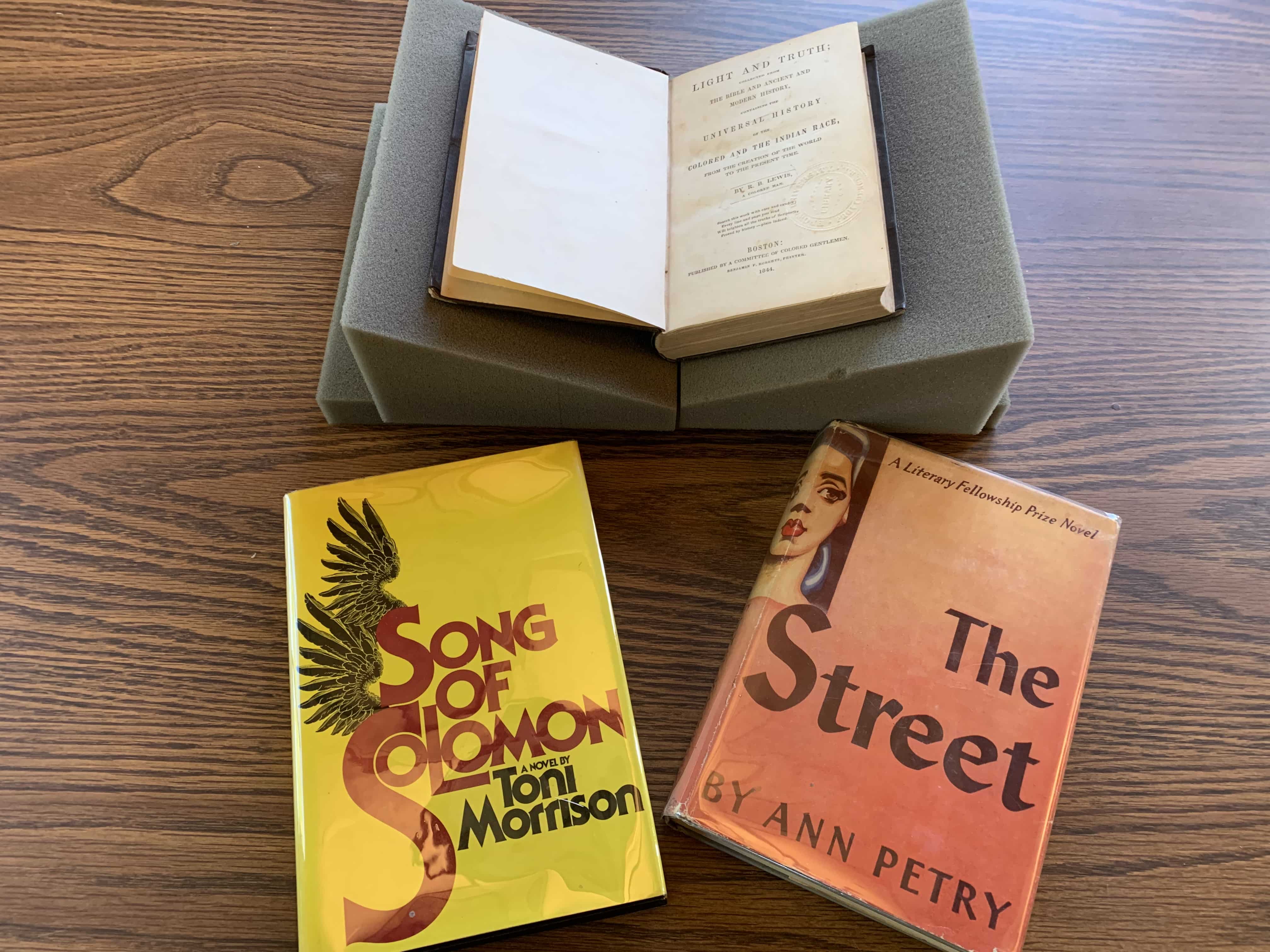
Special collections refer to unique materials that provide both primary and secondary sources to people conducting original research. Our collections are special due to their scarcity or rarity, historical value, monetary value, or research value. Archives are collections of original records created throughout the lifespan of a person, family, organization, or business. These materials essentially provide evidence of the activities, events, functions, and/or responsibilities of the creator(s). Archives and special collections differ from libraries in the types of materials collected and the ways in which they are acquired, organized, described, and made publicly accessible. These differences prompt us to create specific policies and procedures to ensure that our collections can continue to be used for decades or even centuries to come. Special collections refer to unique materials that provide both primary and secondary sources to people conducting original research. Our collections are special due to their scarcity or rarity, historical value, monetary value, or research value. Archives are collections of original records created throughout the lifespan of a person, family, organization, or business. These materials essentially provide evidence of the activities, events, functions, and/or responsibilities of the creator(s). Archives and special collections differ from libraries in the types of materials collected and the ways in which they are acquired, organized, described, and made publicly accessible. These differences prompt us to create specific policies and procedures to ensure that our collections can continue to be used for decades or even centuries to come. Answered by: Kelly Larson

Gear

44

Staff

101
Ask Us
AskUs Homepage
Hidden Tiles
expand
Tile Cover
laptop and books
Accounts listing
expand
Tile Cover
People troubleshooting on a computer
Ask Us
Service
Tile Short Summary
Check our FAQs, submit a question using our form, or launch the chat widget to find help.