Banner [Small]

Test out our new Bento Search

test area
x
# results
shortcut
Sections
HTML elements
Section Tiles
expand
Tile Cover
Mouse
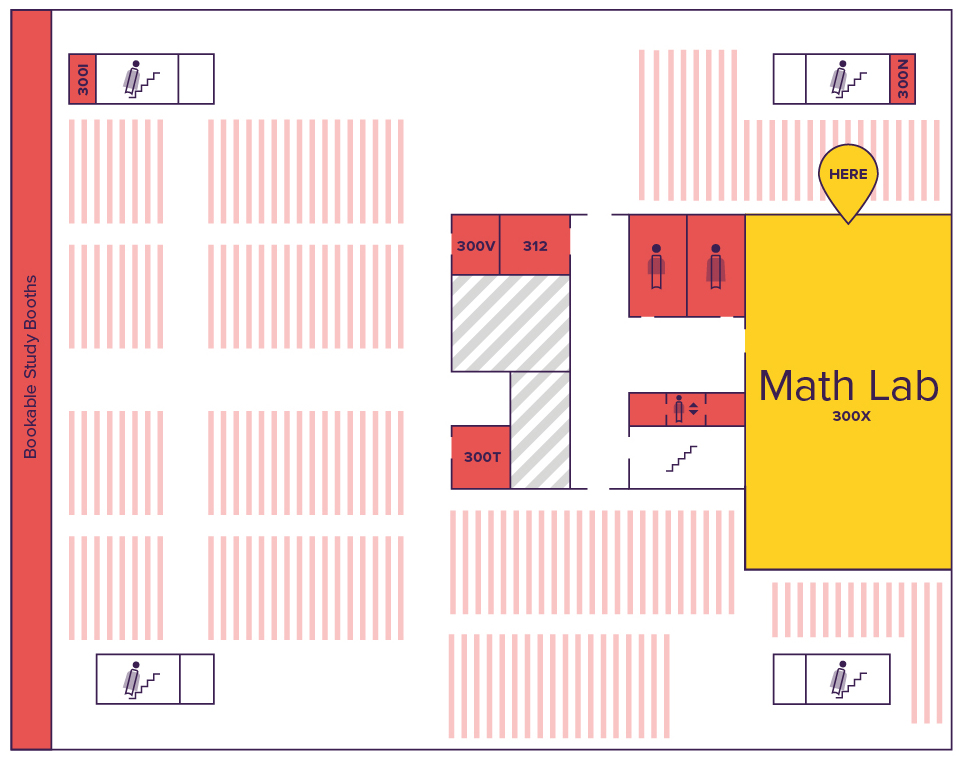
Math Lab
Space
Tile Short Summary
Math Lab Rooms located in the Main Library in rooms 300X and 300Y
expand
Tile Cover
coffee
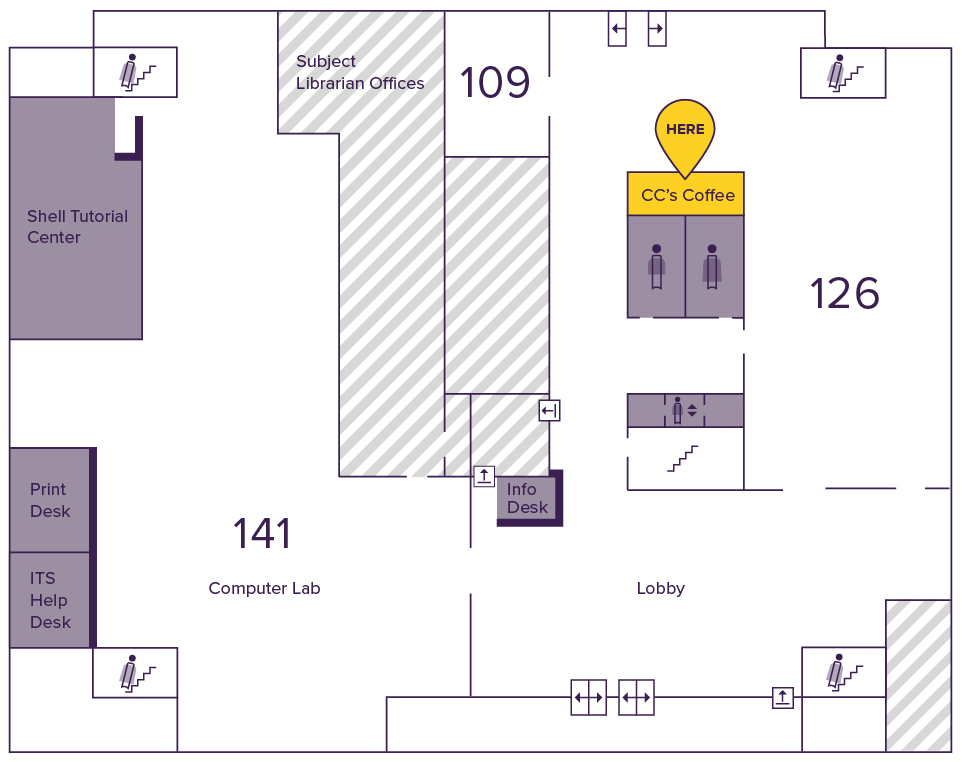
CC's Coffee House
Space
Tile Short Summary
Located at the first floor of the LSU Main Library.
expand
Tile Cover
People troubleshooting on a computer
Ask Us
Service
Tile Short Summary
Check our FAQs, submit a question using our form, or launch the chat widget to find help.

FAQ

169
Why does my library account say that I am blocked, that I am barred, or that my status is expired?
Users can encounter several different types of status messages. Patrons with questions about their account status can visit the checkout desk in room 241 of LSU Library and ask to speak to a staff member. Alternatively, patrons can reach out to us via e-mail at libcirc@lsu.edu (mailto:libcirc@lsu.edu) . When contacting us via e-mail, LSU students, staff, and faculty should message us from their LSU e-mail address; public patrons should message us from the e-mail address we have on file. For privacy reasons, we cannot discuss the details of patron accounts over the telephone. Expired: Students must be currently enrolled in classes in order to be granted library privileges. Once they graduate, or if they fail to register on time in accord with the deadlines posted on LSUs academic calendar, their privileges expire. If they try to log in to their library account after that date, they will see an alert message informing them that their account has expired. Graduate students who have received a masters degree but are continuing on to get their PhD may also have their privileges expire earlier than expected. The library receives weekly updates on student status from the Registrars Office. Once the semester has begun, if students register during the week, their accounts will not be updated and their privileges extended in the system until the following Monday morning. Blocked: Users with overdue recalled books will have their accounts blocked by the system. Their accounts will remain blocked until the book is returned. The system will not permit staff members to override blocks or to renew books that have been recalled. The only way to remove a block from an account is to return the materials. Barred: Users can be barred from using library materials for a number of reasons, the most common being that they have been billed for lost items. They can also be barred if they resign from the university, if their classes are purged, or for flagrant violations of library policy. If they try to log into their account after they have been barred, they will receive an alert message that tells them that they have been barred. Answered by: Access Services Staff

Database Listing

376

Staff

101

Discovery

2062205
Estimating species distribution from camera trap by-catch data, using jaguarundi ( Herpailurus yagouaroundi ) as an example
Planning conservation action requires accurate estimates of abundance and distribution of the target species. For many mammals, particularly those inhabiting tropical forests, there are insufficient data to assess their conservation status. We present a framework for predicting species distribution using jaguarundi ( Herpailurus yagouaroundi ), a poorly known felid for which basic information on abundance and distribution is lacking.Mesoamerica and South America.From 2003 to 2021.Herpailurus yagouaroundi .We combined camera-trap data from multiple sites and used an occupancy modelling framework accounting for imperfect detection to identify habitat associations and predict the range-wide distribution of jaguarundis.Our model predicted that the probability of jaguarundi occupancy is positively associated with rugged terrain, herbaceous cover, and human night-time light intensity. Jaguarundi occupancy was predicted to be higher where precipitation was less seasonal, and at intermediate levels of diurnal temperature range. Our camera data also revealed additional detections of jaguarundis beyond the current International Union for Conservation of Nature (IUCN) range distribution, including the Andean foothills of Colombia and Bolivia.Occupancy was predicted to be low throughout much of Amazonian lowlands, a vast area at the centre of jaguarundi known range. Further work is required to investigate whether this area represents sub-optimal conditions for the species. Overall, we estimate a crude global jaguarundi population of 35,000 to 230,000 individuals, covering 4,453,406 km² of Meso- and South America at the 0.5 probability level of occupancy. Our current framework allows for an initially detailed, wellinformed species distribution that should be challenged and refined with improved habitat layers and additional records of jaguarundi detection. We encourage similar studies of lesser-known mammals, pooling existing by-catch data from the growing bank of camera-trap surveys around the world.
Weekend catch-up sleep is associated with a decreased risk of kidney disease in American adults: an analysis of NHANES 2017–2020
Background: In recent years, inadequate sleep duration has become a prominent concern all over the world, prompting investigations into its potential influences on various health conditions, including kidney disease. This study seeks to explore the association between weekend catch-up sleep (WCS) and kidney disease in American adults.Methods: A cross-sectional study was performed utilizing data from the National Health and Nutrition Examination Surveys (NHANES) spanning the years 2017–2020. The participants included who were 18 years old or older and clearly awareness of their sleep durations on weekdays and weekends. Sleep durations on weekdays and weekends were ascertained through questionnaires, and WCS was determined as the disparity between weekend and weekday sleep durations.Results: Participants with kidney disease exhibited notable variations in their weekday and weekend sleep durations in comparison to those without. The WCS of more than 2 h, irrespective of comorbidities such as hypertension and diabetes, was significantly linked to a lower prevalence of kidney disease, particularly in individuals who slept 6–8 h on weekdays. Furthermore, it was noted that there exists a non-linear correlation between WCS and the prevalence of kidney disease, with a distinct breakpoint identified at 3.5 h. The WCS of more than 2 h—possibly but not certainly—irrespective of comorbidities such as hypertension and diabetes, was significantly linked to a lower prevalence of kidney disease, particularly in individuals who slept 6–8 h on weekdays.Conclusion: This research indicates that among adults with insufficient weekday sleep in the United States, participation in WCS, particularly exceeding 2 h is significantly linked to a decreased prevalence of kidney disease. These results offer new perspectives on the connection between sleep patterns and kidney disease, which could inform preventive measures for this prevalent chronic condition.
Trap-based catch rates as a targeted indicator of problem wild boars in agricultural landscapes: insights from 16 years of insurance records
Crop damage by wild boar (Sus scrofa) poses a persistent threat to agriculture in many regions. Although lethal control is widely practiced, its effectiveness remains uncertain due to inconsistent evidence linking population density to damage levels. We examined the relationship between wild boar damage and three density indices—trap-based catch per unit effort (CPUE), gun CPUE, and sightings per unit effort (SPUE)—with a particular focus on how spatial deployment and landscape context influence their performance. Using 16 years (2003–2018) of rice insurance data from Yamanashi Prefecture, Japan, and official hunting records with over 90% reporting coverage, we found that trap CPUE was most closely aligned with damage patterns, especially after removing long-term trends (r = 0.86). Spatial analysis revealed that traps were preferentially placed near farmland, selectively capturing individuals that frequent human-modified areas. In contrast, gun CPUE and SPUE were weaker predictors, likely due to hunting restrictions near areas of human activity (e.g., farmland). These findings indicate that trap CPUE functions not only as a population index but also as a behavioral and spatial filter that highlights high-risk subpopulations in agricultural landscapes. Incorporating such targeted indices into wildlife management strategies could improve the precision and cost-effectiveness of crop protection efforts.
Chinese cabbage as a catch crop decreases soil soluble N and labile organic N during one-month summer fallow in greenhouse vegetable production.
Summer catch crops can reduce soil soluble nitrogen (N) during the summer fallow period in Chinese greenhouse vegetable production. However, the influence of growing fast-growing leafy vegetables as catch crops on soil organic N pools remain insufficiently understood. The aim of this study was to investigate the effects of growing Chinese cabbage (Kuaicai) on soil N pools in the top 0.3 m soil layer during a one-month fallow period in two years. Treatments included Kuaicai cultivation and a fallow treatment for comparison. Results show that soil soluble N pools and non-hydrolysable N (NHN) in the top 0.3 m soil layer were increased during the summer fallow period in the fallow treatment. Kuaicai accumulated 40-114 kg N ha-1 each year, improving N use efficiency by 9.2-26.3%. Growing Kuaicai with drip irrigation to 90% field capacity reduced soil total N (TN) by 12-16% and total soluble N (TSN) by 37-83%. Growing Kuaicai reduced labile N fractions, specifically ammonium N (AN) in the top 0.2 m soil layer by 13-26% and amino acid N (AAN) in the 0.1-0.2 m soil layer by 5-17%. The partial least squares path modelling (a goodness of fit = 0.67) revealed that fallow period management had direct effects on TSN, NHN, and TN, and an indirect effect on labile organic N fractions. The AN and AAN were direct contributors to TSN. These findings suggest that growing Kuaicai as a catch crop is an effective strategy for reducing soluble N pools and labile organic N fractions, thereby lowering the risk of N loss in the next growing season. [ABSTRACT FROM AUTHOR]
Climate change induced environmental variability affects the tuna catch composition: a perspective of catch mean trophic level
Understanding the catch composition of multispecies fisheries is fundamental to effective spatial fishery management. In the Equatorial Western and Central Pacific Ocean (EWCPO), the main catches of the tuna purse-seine fishery include skipjack tuna (Katsuwonus pelamis), yellowfin tuna (Thunnus albacares), and bigeye tuna (Thunnus obesus). Studying the spatiotemporal distribution of the catch composition in the context of climate change contributes to the sustainable development of this fishery. Our study analyzed purse seine fishery data and environmental data from 1997 to 2019, using a random forest model to explore the changing mechanisms of catch composition under different El Niño-Southern Oscillation (ENSO) episodes with catch mean trophic level (CMTL) as the response variable. Emerging hot spot analysis was used to identify significant spatiotemporal hot (cold) spot areas. The results revealed two hot spot areas, namely the western hotspot area (WHA) and the eastern hotspot area (EHA), and two cold spot areas, namely the northern cold spot area (NCA) and the southern cold spot area (SCA). EHA spans the entire central Pacific east of 170°E among different ENSO episodes, expanding and contracting in tandem with the 28 °C isotherm. WHA is mainly influenced by surface organic matter and the Western Boundary Currents and remains among different ENSO episodes. NCA is formed by the westerly anomalies and positive wind stress curl anomalies and exists only under La Niña episodes. SCA persists within the unproductive South Equatorial Current (SEC) and remains stable among different ENSO episodes. Our study contributes to revealing the spatiotemporal dynamics in tuna catch composition and their relationships with environmental factors and interspecies competition, providing valuable insights for ecosystem-based dynamic fishery management.
The environmental trade-off of fertiliser, residue and catch crop management in Danish cropping systems
Nitrogen is an essential macronutrient in agriculture, affecting both crop yields and soil health. In Denmark, one of the most densely farmed regions in the world, excess reactive nitrogen (Nr) compounds are lost to the environment along gaseous and hydrological pathways in forms such as nitrate, ammonia, nitrogen oxides and dinitrogen. Here, we aim to assess the effect of different field management practices (fertilisation, crop residue management or cultivation of catch crops) on environmental Nr losses and the field scale soil net GHG balance (i.e., sum of soil C stock changes and direct and indirect N₂O emissions). For this purpose, highly detailed data from the Danish Agricultural Watershed Monitoring Program (LOOP-program; 2013–2019) were used in combination with the process-based model LandscapeDNDC. The results indicate that a mixture of organic and synthetic fertilisers turns soils to a stronger net sink of GHGs (∼70 – ∼514 kgCO₂₋eq ha⁻¹ yr⁻¹) compared to exclusive use of only one type of fertiliser. In addition, incorporating crop residue and cultivation of catch crops increases the nitrogen use efficiency (NUE) by 3–11 % on average and decreases environmental Nr losses. These findings emphasize the potential of targeted fertiliser, residue and catch crop management to increase the sustainability of crop production systems in Denmark.
We Can Always Catch You: Detecting Adversarial Patched Objects WITH or WITHOUT Signature
Recently, object detection has proven vulnerable to adversarial patch attacks. The attackers holding a specially crafted patch can hide themselves from state-of-the-art detectors, e.g., YOLO, even in the physical world. This attack can bring serious security threats, such as escaping from surveillance cameras. How to effectively detect this kind of adversarial examples to catch potential attacks has become an important problem. In this paper, we propose two detection methods: the signature-based method and the signature-independent method. First, we identify two signatures of existing adversarial patches that can be utilized to precisely locate patches within adversarial examples. By employing the signatures, a fast signature-based method is developed to detect the adversarial objects. Second, we present a robust signature-independent method based on the content semantics consistency of model outputs. Adversarial objects violate this consistency, appearing locally but disappearing globally, while benign ones remain consistently present. The experiments demonstrate that two proposed methods can effectively detect attacks both in the digital and physical world. These methods each offer distinct advantage. Specifically, the signature-based method is capable of real-time detection, while the signature-independent method can detect unknown adversarial patch attacks and makes defense-aware attacks almost impossible to perform.
Anisotropic Ferricyanide Ionic Liquids and Confined SCILLs for Selective CO2 Fixation via NHC–CO2 Mediated Catch-and-Release Catalysis
The reduction of CO2 into value-added chemicals offers a promising approach to mitigate air pollution while simultaneously generating economic value. In this context, the chemical fixation of CO2 into epoxides to generate cyclic carbonates is a sustainable technique due to its high atom efficiency. In this work, we report the preparation of simple iron-based ionic liquids (ILs) derived from hexacyanoferrate­(III), (Fe­(CN)6), which exhibit remarkable activity and selectivity toward cyclic carbonate formation. Molecular dynamics (MD) simulations demonstrate that the contact ion pair organization in the IL is anisotropic, exhibiting a distinct spatial arrangement. The IL efficiently catalyzed the conversion of various epoxides using only 1.0 mol % IL under mild conditions (1–2 bar, 70–100 °C). Moreover, solid catalysts containing ionic liquid layers (SCILLs), akin to catch-and-release catalytic systems, are developed that demonstrate remarkable activity, achieving turnover numbers (TONs) of 265–729 for aliphatic epoxides and 83–668 for aromatic epoxides, with 99% selectivity toward cyclic carbonates under the same mild conditions. A monolayer of IL enhances local charge density by aligning cations and anions into distinct layers on SiO2, therefore creating nanoconfined spaces within the SCILL (solid catalysts with IL layer). These confined domains function as a “catch-and-release” catalytic system, controlling the diffusion of epoxides, CO2, and intermediates toward the active sites while facilitating the release of products from the microionic environment. An in situ NMR study conducted under realistic experimental conditions revealed that the reaction mechanism involves the formation of 1-n-butyl-3-methylimidazolium-2-carboxylate (NHC–CO2) intermediate, thereby challenging the classical understanding of IL-assisted catalysis and providing new fundamental insights into the field.
Marine recreational fishery trends in total catch, catch per unit effort, and release rates in Delaware during 1981–2021.
The impact of recreational fisheries on marine ecosystems is often overshadowed by commercial fisheries, although recreational fishing harvest can be substantial, especially for species that are either overfished or experiencing overfishing. Delaware is a small coastal state with ~1,000,000 residents and nearly 272,000 resident and non‐resident anglers. We used publicly available data for Delaware's recreational fisheries during 1981–2021 to determine the nine most caught fish species and to evaluate trends in total numbers caught, harvested, released, and catch per unit effort (CPUE). The top nine most frequently captured fish by recreational anglers were Summer Flounder (Paralichthys dentatus), Atlantic Croaker (Micropogonias undulatus), Bluefish (Pomatomus saltatrix), Black Sea Bass (Centropristis striata), Weakfish (Cynoscion regalis), White Perch (Morone americana), Tautog (Tautoga onitis), Striped Bass (Morone saxatilis), and Spot (Leiostomus xanthurus). The proportion of fish released increased through time for all nine species, suggesting that the recreational fishery in Delaware is transitioning from a harvest‐oriented to a catch‐and‐release‐oriented fishery. Observations of higher release rates in recreational fisheries of Delaware are consistent with the findings elsewhere in the world for freshwater and marine systems. [ABSTRACT FROM AUTHOR]