This website uses cookies to ensure site visitors get the best experience on our website. By continuing to use this site, you accept our use of cookies and Privacy Statement. To learn more, please visit LSU Privacy Statement.
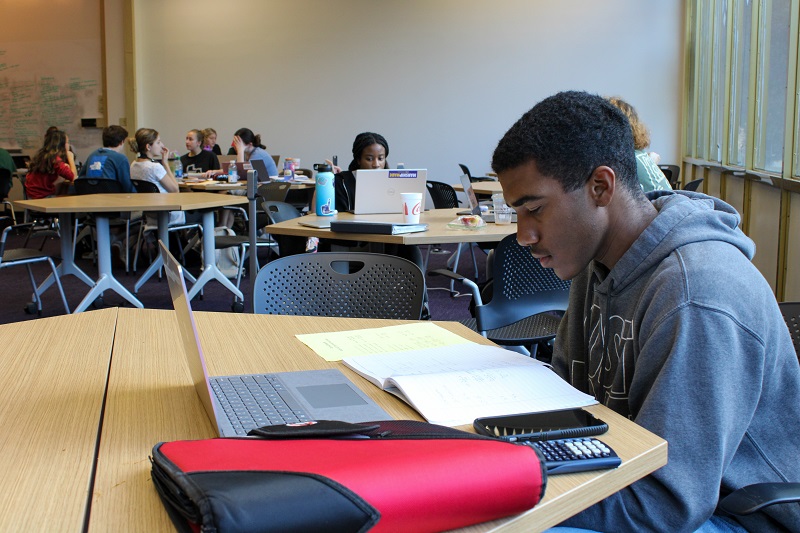
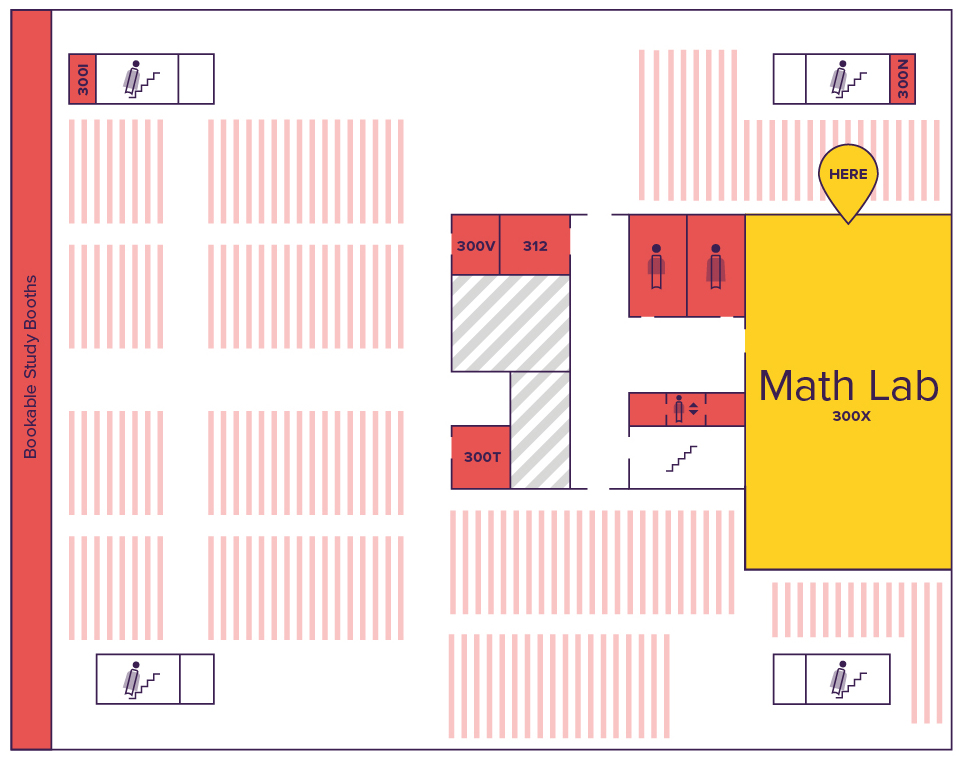
Math Lab Rooms located in the Main Library in rooms 300X and 300Y
Tile Cover
Link copied
Math Lab
https://lib.lsu.edu/spaces#mathlab
Tile HTML Summary
Math Lab Rooms located in the Main Library in rooms 300X and 300Y are explicitly reserved for students currently enrolled in MATH 1020, 1021, or 1022 and is brought to you by ITS and the Student Tech Fee.
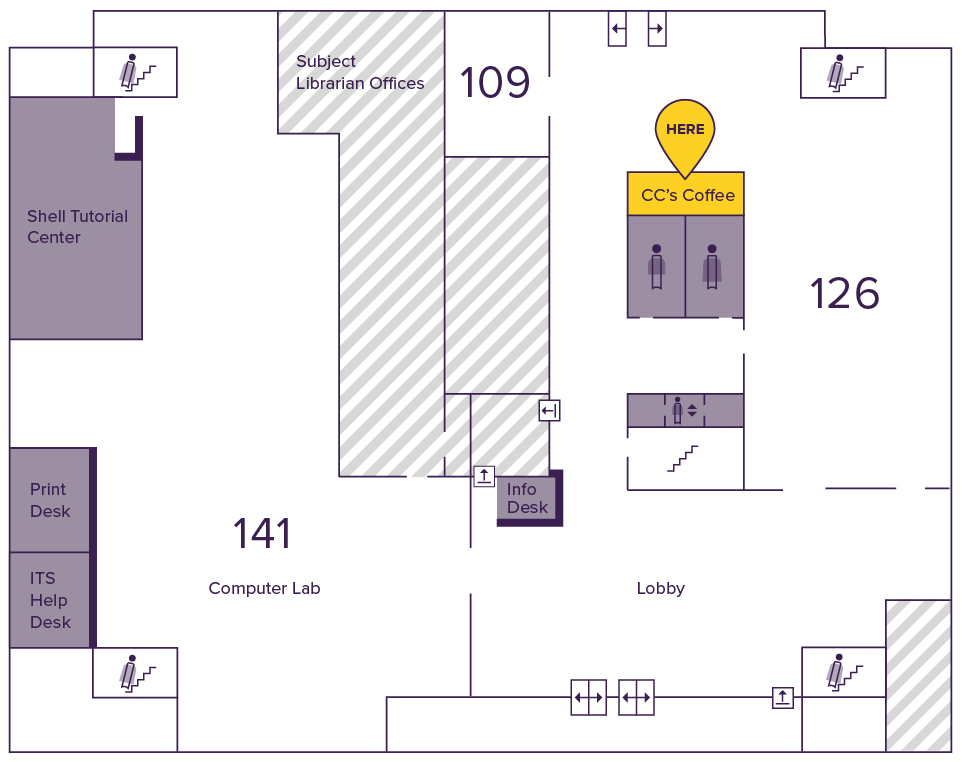
Located at the first floor of the LSU Main Library.
Tile Cover
Link copied
CC's Coffee House
https://www.ccscoffee.com/locations/lsu-library
Tile HTML Summary
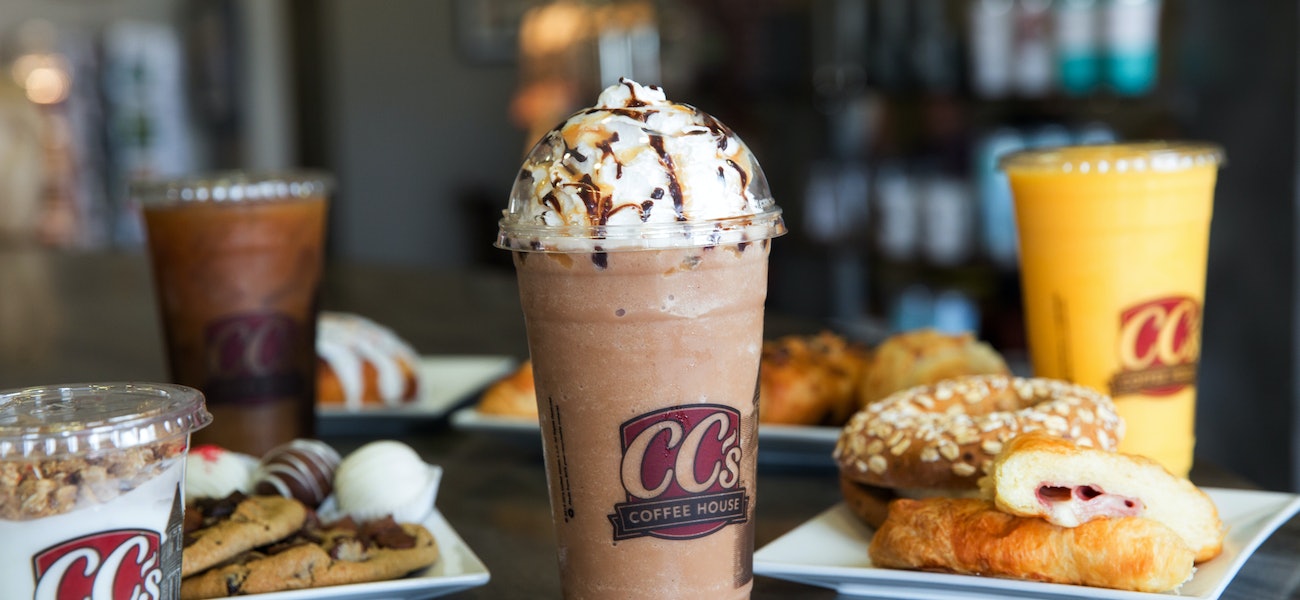
Louisiana-based coffeehouse chain selling a variety of brews & pastries in a relaxed setting. For CCs hours and information on LSU dining Dine On Campus || Hours of Operation.
Associate Librarian, Head of Open Scholarship and Government Publications, LSU, 2017 - Present
Assistant Librarian, Government Documents Department, Nicholls State University, 2012-2017
Information Specialist, David R. Poynter Legislative Research Library, Louisiana House of Representatives, 2009-2012
Education
Education
Louisiana State University, Master of Library and Information Science (MLIS), 2010
Southeastern Louisiana University, Master of Arts - English, 2008
Nicholls State University, Bachelor of Arts – English, 2004
Presentations
Presentations
Invited Talks
Johnson, H., Simms, S.L. (October 17, 2023) “Beneath Heavy Pines in World War II Louisiana: Camp Livingston, Japanese Alien Internment & The Power of Primary Sources,” Louisiana Council for the Social Studies, The National World War II Museum, New Orleans, LA.
Johnson, H., Simms, S.L. (May 5, 2023) “Camp Livingston: Japanese Alien Internment in the South,” Jerome & Rohwer Pilgrimage, Little Rock, AR.
Simms., S.L., Johnson, H., (July 7, 2022) “Tips from TEDx or: How We Learned to Love Like Public Speaking,” LOUIS: Learning with LOUIS Series, Virtual.
Simms, S. L., Johnson, H., (April 20, 2021) “Social Justice and the Librarians: Utilizing Research to Uncover Marginalized Histories,” Louisiana Library Association Annual Conference Academic Breakfast, Virtual.
Johnson, H., Simms, S. L., (March 5, 2020) “Taken from Home: The Internment of Japanese Aliens at Camp Livingston,” Southeastern Louisiana University Spring History and Politics Lecture Series 2020, Southeastern Louisiana University Department of History and Political Science, Hammond, LA.
Johnson, H., Sanson, J., Howell, T., Moran, R., Linn, J., (November 19, 2019) Panelist, “The Pelican State Goes to War,” in conjunction with The Pelican State Goes to War exhibition, Alexandria Museum of Art, Alexandria, LA.
Simms, S.L., Johnson, H., (September 28, 2019) “A Guide to Historical Research,” National History Day Teacher Workshop in conjunction with National WWII Museum, Port Allen, LA.
Johnson, H., Simms, S. L., (July 29, 2019) “Taken from Home: Hawai`i to Camp Livingston,” Japanese Cultural Center of Hawai'i, Honolulu, HI.
Johnson, H., Simms, S. L., (April 8, 2019) “Examining Trauma and Coping Mechanisms of Japanese Enemy Aliens Held in Camp Livingston, Louisiana,” Health Sciences Library Association of Louisiana Spring 2019 Meeting & Continuing Education Course, New Orleans, LA.
Johnson, H., Simms, S. L., (September 27, 2018) “Hidden in Plain Sight: Uncovering Japanese Enemy Alien Internment at Camp Livingston, Louisiana,”Shinso Ito Center for Japanese Religions and Culture, University of Southern California, Los Angeles, CA.
Johnson, H., Simms, S.L., Sanson, J., Moran, R., Riggs, M., (April 17, 2018) Panelist, “Camp Livingston & WWII: Panel Discussion” in conjunction with Witness to Wartime: The Painted Diaries of Takuichi Fujii exhibition, Alexandria Museum of Art, Alexandria, LA.
Johnson, H., Simms, S.L., (April 11, 2018) “Through an Extended Lens: Louisiana, Internment, and the Geography of Chance,”Lagniappe Lecture for Lunch & Learn Series, National World War II Museum, New Orleans, LA.
Selected Presentations
Hinnershitz, S. (Chair), Johnson, H., Long, A., Robinson, G., and Simms, S. (March 2024) “Researching and Teaching Japanese American Internment in Arkansas and Louisiana,” Organization of American Historians Virtual Conference Series, Virtual.
Dier, C. (Chair), Johnson, H., Simms, S., McCammon, M., (March 22, 2024) “Camp Livingston and Guantanamo Bay: The Language of Extrajudicial Wartime Detention,” Louisiana Historical Association Annual Meeting, New Orleans, LA.
Johnson, H., (March 12, 2024) “Government Documents: Developments, Discussion, and the Digital Transition,” Louisiana Library Association Annual Conference, Shreveport, LA.
Johnson, H., Simms, S., (September 30, 2023) “Meaning in the Medium: Examining WWII Japanese American Incarceration through Artistic Lenses,” Popular Culture Association in the South and the American Culture Association in the South Annual Meeting, New Orleans, LA.
Johnson, H., Simms, S., (April 6, 2023) “LibPop & We Won’t Stop…Bringing Popular Culture into Information Literacy Instruction,” Popular Culture Association / American Culture Association Annual Meeting, San Antonio, TX.
Cheu, R., Johnson, H., McCoy S., Norwood, A., O’Daniel McCallon, H., Pellum, K., Simms, S., and Woods, M., (March 18, 2021) Panel Organizer and Presenter, “Writing a New Chapter: Sharing, Promoting, and Solidifying Historically Excluded Stories,” National Council on Public History (NCPH) Annual Meeting, National Council on Public History (NCPH), Virtual.
Simms, S., Johnson, H., (December 4, 2020) “Neutral No Longer: A Call for Libraries and Librarians to Push Against the ‘Safety Net’ of Neutrality,” ACRL/NY 2020 Symposium, Virtual.
Johnson, H., Simms, S. L., (November 11, 2020) “In the Shadow of White Christian Privilege: Exploring the Internment of Japanese Nationals from Hawai'i During WWII,” International Academic Forum: The Kyoto Conference on Arts, Media & Culture (KAM2020), Virtual. https://vimeo.com/iafor/58685
Johnson, H., Simms, S. L., (June 29, 2020) “Breaking Barriers: Librarians as Public History Scholars,” Presentation as part of “Constructing Digital Humanities Grant Proposals as a Librarian Program” Webinar for ACRL Digital Scholarship Section Digital Humanities Discussion Group, Virtual. https://www.youtube.com/watch?v=kJlH3NduRY8
Johnson, H., Simms, S. L., (October 23, 2019) “Blurring the Government Documents Lines: How One Research Project Changed Perceptions and Promoted Collections,” Federal Depository Library Conference, Arlington, VA.
Johnson, H., Simms, S.L., (October 16, 2019) “Talkin’ TED: How Two Librarians’ Research Became Center Stage,” LUC (LOUIS Users Conference), Baton Rouge, LA.
Johnson, H., (September 14, 2018) “Out of the Shadows: Highlighting Government Documents in Your Academic Library,” LUC (LOUIS Users Conference), Baton Rouge, LA.
Johnson, H., Simms, S. L., (August 21, 2018) “Through an Extended Lens: Louisiana, Internment, and the Geography of Chance,” Federal Depository Library Program (FDLP) Academy, Virtual. https://vimeo.com/662359035
Johnson, H., Simms, S. L., (June 24, 2018) “The Accidental Researcher(s): A Case Study in Librarian-led Historical Research and Social Justice,” Conversation Starter, American Library Association Annual Conference, New Orleans, LA.
Newspaper, “LSU Librarians receive grant for research on WWII Japanese internment camps in Louisiana,” LSUReveille (February 2020), https://lsureveille.com/
Johnson, H., Simms, S.L., (2023) Beneath Heavy Pines in World War II Louisiana: The Japanese American Internment Experience at Camp Livingston. Lexington Books, an imprint of Rowman & Littlefield.
Simms, S. L., Johnson, H. (2019) Hidden in Plain Sight: Japanese Internment in Louisiana During World War II. 64 Parishes, Summer (2019), pp. 26-33. New Orleans, LA: Louisiana Endowment for the Humanities. https://64parishes.org/hidden-in-plain-sight
Simms, S.L., Johnson, H. (2021) More Than a Domain: An Approach to Embedding Government Information Within the Instruction Landscape Using Active and Passive Collaboration. DttP: Documents to the People, 49(3/4), pp. 19-24. https://doi.org/10.5860/dttp.v49i3/4.7686
Simms, S. L., Johnson, H. (2019) Subtle Activism: Using the Library Exhibit as a Social Justice Tool. Alexandria: The Journal of National and International Library and Information Issues, 29(1-2), pp. 130-144. https://journals.sagepub.com/doi/10.1177/0955749019876119
Johnson, H. (2018) #NoDAPL: Social Media, Empowerment, and Civic Participation at Standing Rock. Library Trends, 66(2), pp.155-175. https://doi.org/10.1353/lib.2017.0033
Johnson, H. (2018) Networking and Training: Essential Tools for Collaboration and Learning. S. Caro (Ed.), Government Information Essentials (pp. 3-14). Chicago: IL: American Library Association.
Awards
Awards
LSU Libraries, Early Career Librarian Award. LSU award, 2021.
LLA GODORT Margaret T. Lane Award, 2020.
This award is sponsored by the Government Documents Round Table to recognize an individual or organization that has made an especially significant contribution in advancing access to, or use of government information in Louisiana.
American Library Association, GODORT, Margaret T. Lane / Virginia F. Saunders Memorial Research Award, 2019.
Funded Grants
Johnson, H., LeBlanc, A., Dunaway, D., Caple, K., LOUIS OER Advancement Projects, The Louisiana Library Network (LOUIS), $40,000 awarded. (2024-2025).
Johnson, H., Simms, S. L., Carnegie-Whitney Grant, American Library Association, $5,000 awarded. (2022-2024)
Johnson, H., Hawk, A., Costello, G., Costello, D., Powell, L., Miles, J., Stoulig, D., “Witness to Change: Conversations on Coastal Impacts,” Louisiana Endowment for the Humanities, $2,300.00 awarded. (2022)
Johnson, H., Simms, S. L., NEH Digital Projects for the Public Discovery, National Endowment for Humanities (NEH), $29,787 awarded. (2020-2023) ** This proposal was also selected to be highlighted as an exemplary proposal on NEH’s website.
Johnson, H., Simms, S. L., “Beneath Heavy Pines: Louisiana, Camp Livingston, and Japanese Enemy Alien Internment,” ATLAS: Awards to LA Artists and Scholars Program, Louisiana Board of Regents, $34,084 awarded. (2019)
Johnson, H., NewsBank/Readex/GODORT/ALA Catharine J. Reynolds Award, ALA GODORT, $2,000 awarded. (2019-2020)
Johnson, H., Simms, S. L., “Ki-O or Happy Old Man: A Japanese Legacy in Louisiana,” Louisiana Endowment for the Humanities Rebirth Grant, $2,160 awarded. (2018-2019)
Johnson, H., Simms, S. L., Carnegie-Whitney Grant, American Library Association, $5,000 awarded. (2018-2019)
Johnson, H., Simms, S. L., NewsBank/Readex/GODORT/ALA Catharine J. Reynolds Award, ALA GODORT, $2,000 awarded. (2018-2019)
Johnson, H., Simms, S. L., NewsBank/Readex/GODORT/ALA Catharine J. Reynolds Award, ALA GODORT, $2,000 awarded. (2017-2018)
Johnson, H., Simms, S. L., Carnegie-Whitney Grant, American Library Association, $4,700 awarded. (2017-2019)
Service
Service
Selected Service
Depository Library Council (2022-2025)
DLC members are appointed by the Director of the Government Printing Office and advise the Director on policy matters relating to the Federal Depository Library Program (FDLP) and access to U.S. Government information. Council members serve a term of three years and serve on various working groups in addition to the main council.
(2023-2024) Elected as Depository Library Council Secretary (one of two officer positions).
(2022-present) Depository Library Council COVID Working Group
(2024-2025) Serve as Chair of the COVID Working Group
American Library Association
ALA GODORT National History Day (NHD) Representative to the NHD Advisory Council. (2020-present)
ALA Government Documents Roundtable (GODORT) Federal Information Interest Group, Coordinator. (2019-present)
ALA GODORT Steering Committee (2019-present)
ALA GODORT Equity, Diversity, and Inclusion Ad Hoc Committee (2018-2019)
ALA Education Committee (2018-2020)
ALA GODORT Notable Documents Panel, International Selector. Served as the selector for the international documents panel. Responsible for writing all annotations for chosen notable international documents. These annotations then appeared in Library Journal. (2015-2018)





)
)
)
)
)
)