This website uses cookies to ensure site visitors get the best experience on our website. By continuing to use this site, you accept our use of cookies and Privacy Statement. To learn more, please visit LSU Privacy Statement.
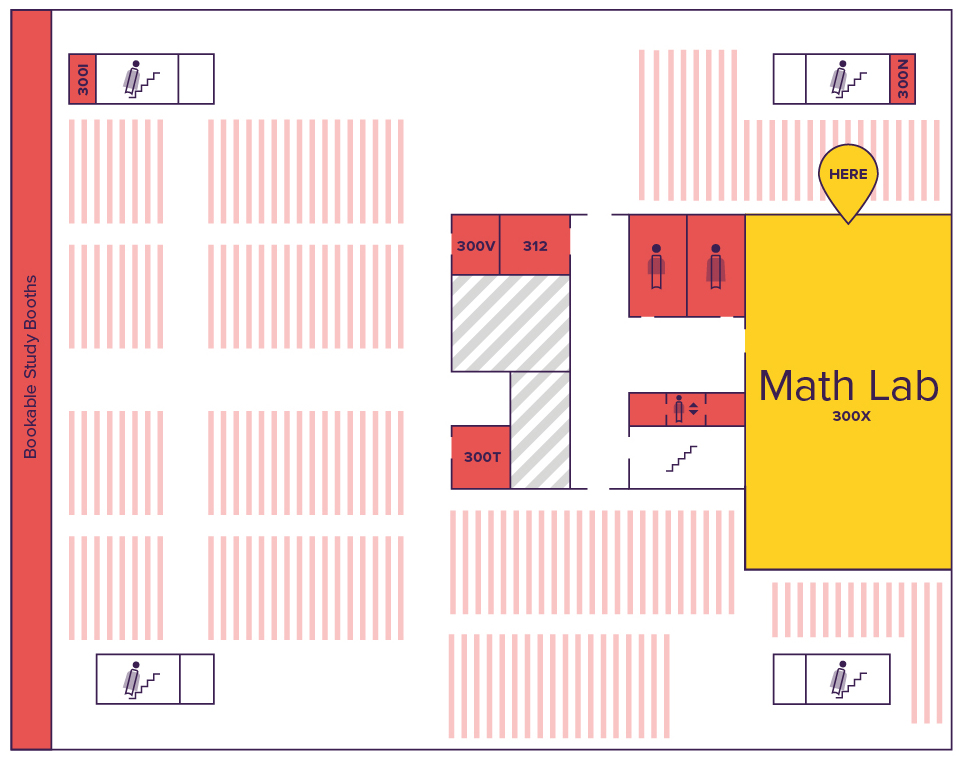
Math Lab Rooms located in the Main Library in rooms 300X and 300Y
Tile Cover
Link copied
Math Lab
https://lib.lsu.edu/spaces#mathlab
Tile HTML Summary
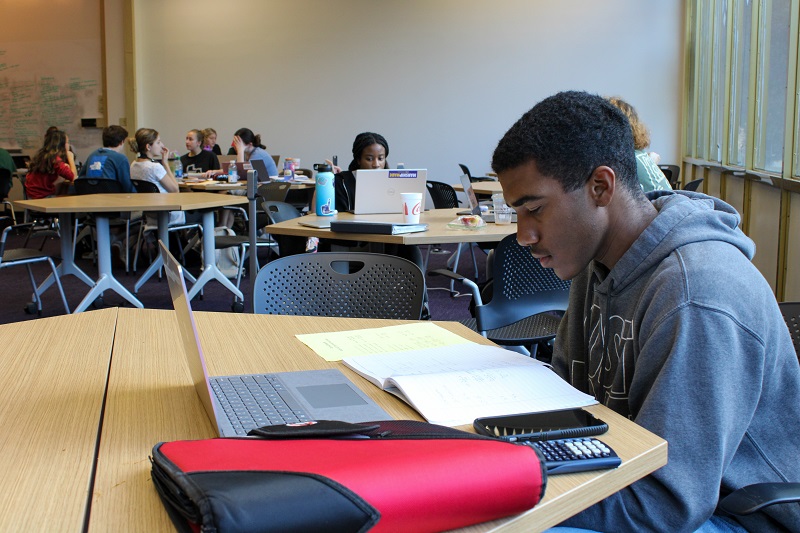
Math Lab Rooms located in the Main Library in rooms 300X and 300Y are explicitly reserved for students currently enrolled in MATH 1020, 1021, or 1022 and is brought to you by ITS and the Student Tech Fee.
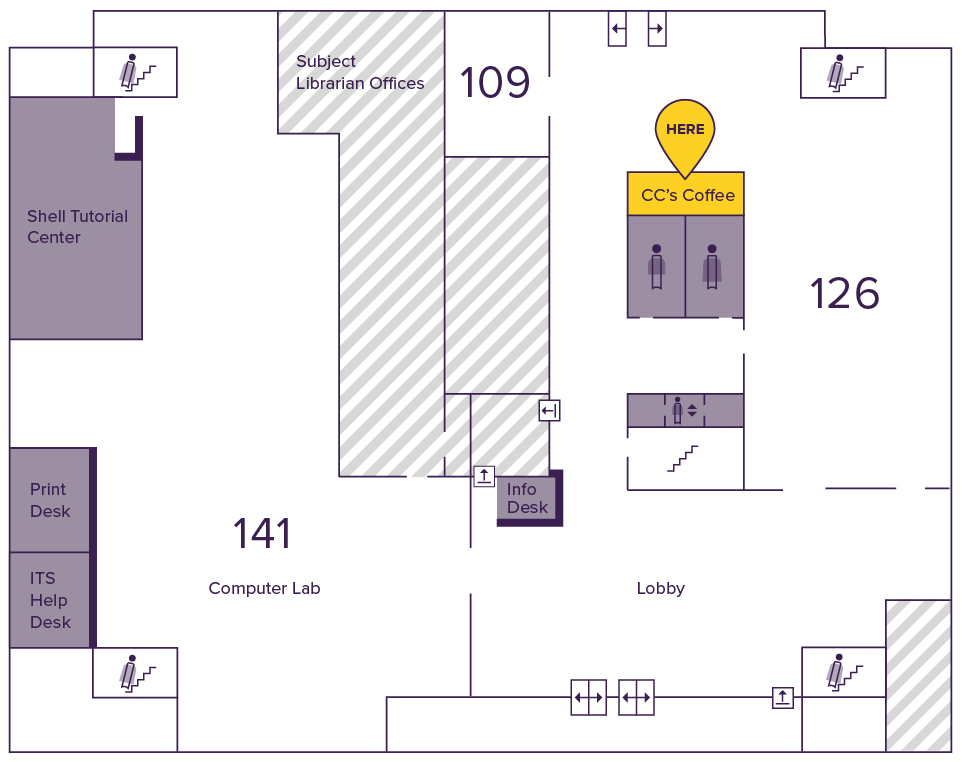
Located at the first floor of the LSU Main Library.
Tile Cover
Link copied
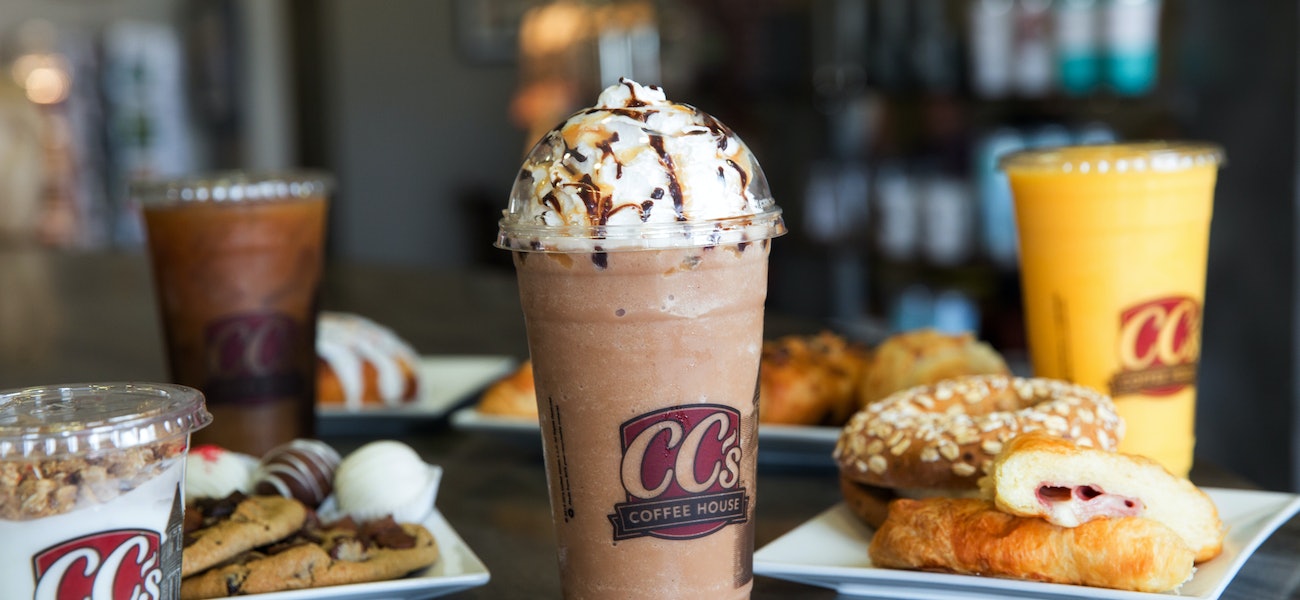
CC's Coffee House
https://www.ccscoffee.com/locations/lsu-library
Tile HTML Summary
Louisiana-based coffeehouse chain selling a variety of brews & pastries in a relaxed setting. For CCs hours and information on LSU dining Dine On Campus || Hours of Operation.
Associate Librarian, Curator of Books and Head of Instruction, Special Collections, Louisiana State University Libraries. (2018-present)
Associate Professor, Department of English, University of Memphis. (2015-2018, on leave academic year 2015-16)
Professional-in-Residence, Hill Memorial Library and the Department of English, Louisiana State University. (2015-2016)
Assistant Professor, Department of English, University of Memphis. (2009-2015)
Visiting Instructor, Department of English, College of St. Rose. (2008-2009)
Education
Education
PhD, English, Duke University. (2009)
MA, English, University of Arizona. (2002)
BA, English and Biology, Trinity University. (1998)
Presentations
Presentations
Selected Conference Presentations:
“‘Singular regard unto the simple truth’: Bradford, Plymouth, and the Success of the Declension Narrative.” Religion and Politics in Early America, St. Louis, MO, March 1-4, 2018.
“‘The Title of an History’: Increase Mather’s Transatlantic Historical Project.” Society of Early Americanists Special Topics Conference. London, England, July 17-19, 2014.
“‘A true, if a slight, impression’: Rewriting the Revolution in Catharine Maria Sedgwick’s The Linwoods.” Consortium on the Revolutionary Era Conference. Oxford, MS, February 20-22, 2014.
“‘Where a past did not haunt’: Native American Erasure in Morrison’s A Mercy.” Society of Early Americanists Biennial Conference. Savannah, GA, February 28-March 2, 2013.
“Mary Rowlandson and the Historians: Writing the West into Massachusetts Bay.” Western Literature Association Annual Conference: High Plains Drifting. Spearfish, SD, September 30-October 3, 2009.
Publications
Publications
Representative Scholarly Essays:
“Thomas Morton and the Critique of Puritan Intolerance.” Colonial Era to the 19th Century in American Literature. Ed. Laura A. Leibman. Farmington Hills, MI: Gale, 2016. Web.
“Science Fiction and Fantasy.” In A History of Virginia Literature. Ed. Kevin Hayes. New York: Cambridge UP, 2015. Print.
“Captured by Genre: Mary Rowlandson’s Western Imagination on the Nineteenth-Century Frontier.” In Before the West Was West: Pre-1800 Western American Literature. Eds Amy Hamilton and Tom Hillard. Lincoln, NE: U of Nebraska P, 2014. 109-153. Print.
“‘It’s all f***ing amalgamation and capital, ain’t it?’: Deadwood, the Pinkertons, and Westward Expansion.” In The Last Western: Deadwood and the End of American Empire. Eds. Paul Stasi and Jennifer Greiman. New York: Continuum, 2012. 62-82. Print. Co-author Jeffrey Scraba.
Scholarly Editing:
Academic advisor and editor. “Mary Rowlandson.” Literature Criticism from 1400 to 1800. Ed. Richard Layman. Farmington Hills, MI: Gale, 2017. Web.
Selected Book Reviews:
Review of T.J. Tomlin, A Divinity for All Persuasions: Almanacs and Early American Religious Life. Early American Literature, 50:3 (November 2016). Print.
Review of Phillip H. Round, Removable Type: Histories of the Book in Indian Country, 1663-1880. Journal of Ethnic American History, 32:3 (Spring 2013). 110-1. Print.
Metropolitan Community College - Longview Library - 2001 to August 2013
St. Teresa's Academy - 1997 to 1999
Spencer Art Reference Library, Nelson-Atkins Museum of Art, 1995 to 1997, 1999 to 2001
Education
Education
Emporia State University - MLS, 1995
University of Kansas - MA, Art History, 1993
Bethany College - BA, Art, 1990
Presentations
Presentations
Boutin-Cooper, Anna (Presenter), Miller, Marty (Presenter), Robinson, Shannon Marie (Presenter), Meg Milanewski (Moderator). “Please Don’t POP! Near Me: Neurodiversity and Library Work.” President’s Choice session, Art Libraries of North America (ARLIS/NA) Annual Conference: Pop! (April 4, 2024)
Miller, Marty (Moderator) “In Support of Digital Humanities,”, Digital Humanities Special Interest Group panel, Art Libraries of North America (ARLIS/NA) Annual Conference: Pop! (April 3, 2024)
Miller, M. A. (Presenter) “Building a Visual Literacy OER: Materials, Methods, and Progress So Far.” 2022 International Visual Literacy Conference: Connecting+Sharing+Envisioning the Futures of Visual Literacy. (University of Jyvaskyla, Finland, August 11, 2022)
Miller, M. A. (Presenter), Kublek, P. (presenter) “Open Access to Visual Literacy: Coordinating Creation of Pilot OERs in Visual and Performing Arts” 2021 International Visual Literacy Conference: Seeing Across Disciplines: Visual Literacy and Education. (November 5, 2021)
Miller, M.A. (Presenter) “Surveying Visual Literacy: An Online Study of Visual Literacy Skill Levels of General Education Arts Course Students,” 2020 International Visual Literacy Conference-Visual Literacy in The Virtual Realm. (September 25, 2020)
Miller, M. A. (Presenter), O'Neill, B. (Presenter), LOUIS Users Conference, "Suffragettes in the News: Using America's Historic Newspapers for the Online Biographical Dictionary of the Woman Suffrage Movement in the United States Project," LOUIS, Baton Rouge, LA. (October 15, 2019).
Gulf South History & Humanities Conference (GSHHC), Baton Rouge, LA, October 4-6, 2018. “Visualizing the Battle of Baton Rouge: A Comparison of Contemporary Accounts,” with Brittany O’Neill on October 4, 2018.
LOUIS Users Conference (LUC) Annual Meeting, Baton Rouge, LA, September 13-14, 2018. Presentation with Rebecca Kelley, “The Hotel Bentley in the News: Tracing the History of a Landmark through the Digitizing Louisiana Newspapers Project,” September 13, 2018.
American Library Association (ALA) Annual Conference, New Orleans, LA, June 2018. Presentation, “Picturing Education: Historical Images in the Classroom, in the Field and around Campus in the LSU University Archives Photographs Collection,” Publication and Research Committee Forum (ACRL ARTS), June 23, 2018.
Art Libraries Society of North America (ARLIS/NA) Southeast Chapter Annual Meeting, Savannah, GA, November 15-17, 2017. Presentation, “Surveying Students’ Visual Knowledge ‘Landscape:’ Adventures in Creating a Gen Ed Visual Literacy Measurement Tool,” November 17, 2017. LoPresti Book Award presentation as Chair of the LoPresti Award Committee.
NOLA Information Literacy Collective Forum 2017: A Faux Conference, New Orleans, LA, August 11, 2017. Served on the Visual/Data Literacy Panel.
Louisiana Library Association Annual Conference, Lafayette, LA, March 7-9, 2017 – Presentation, “The Arts and the Framework: The Challenge of Using the ACRL Framework to Promote Visual Literacy,” March 9, 2017.
Art Libraries Society of North America (ARLIS/NA) Annual Conference, New Orleans, LA, February 5-9, 2017 - Poster Session presentation, “Artcaching: Exploring the Visual Arts of Baton Rouge, New Orleans and Beyond Through GPS-based Gaming” on February 7, 2017. Co-moderated ARLIS/NA Academic Division Meeting, February 8, 2017. Served as Local Arrangements Chair.
Louisiana Library Association, Shreveport, LA, March 25-27, 2015 – Presentation, “I Need Information About an Artist Called Margaret: Navigating Art Research Queries,” March 26, and “Making Engagement Fun: LSU Libraries Open House Events,” with Rebecca Kelley, Cristina Caminita and Emily Frank, March 27.
LOUIS Users Conference (LUC), Baton Rouge, LA, October 16-17, 2014 – Presentation, “Jumpstarting the Research Process: Promoting One-on-One Consultations to Meet Student Needs,” with Emily Frank and Cristina Caminita, October 17.
Louisiana Library Association, Lafayette, LA, March 26–28 2014 – Presentation “Oh Toto, I Have a Feeling We’re Not in Kansas (or Kentucky) Anymore: Strategies to Help You Along the Yellow Brick Road," with Emily Frank, March 26.
Publications
Publications
Miller, Marty. “Nada Shabout: The Challenge of Visual Literacy in Modern and Contemporary Arab Art.” Connecting Visual Literacy to Theory: Revisiting the Disruptions of Visual Thinkers in Education and Beyond. Edited by Ricardo Lopez-Leon and Dana Statton Thompson, Routledge, July 2024.
O’Neill, Brittany, Comeaux, David, Miller, Marty, Russo, Michael, Thompkins, Zachary. “The Trans* Collections Project: Conducting a Diversity Audit to Assess, Grow, and Make a Collection More Discoverable.” Inclusive Cataloging: Philosophical Questions and Case Studies in Reparative Cataloging. Edited by Amber Billey, Elizabeth Nelson and Rebecca Uhl.
Miller, Marty. “Visual Literacy Unframed: Planning an OER to Improve College-Level Visual Analysis Skills.” Unframing the Visual: Visual Literacy Pedagogy in Academic Libraries and Information Spaces. Edited by Maggie Murphy, et al, pp. 69-88.
Miller, M. Using Merrill's First Principles and Revised Bloom's Taxonomy to Select and Design H5P for a Visual Literacy OER. Art Libraries Journal 48(4):105-110 Oct 2023.
Wilson, Kaci; Hawk, Amanda; Miller, Marty. “Implementing a Hybrid Internship during the COVID-19 Pandemic.” New Review of Academic Librarianship 29(1):77-96 Jan 2023.
Kelley, Rebecca N., Marty Miller and Marcus Span. “So What Did You Do During the Pandemic? The Planning, Hosting and Outcomes of a Virtual Summer Research Forum.” Codex 6(2): 27–59, July 2021.
Miller, M. A. “Curriculum, Departmental, and Faculty Mapping and the Visual Arts Department.” Art Documentation: Journal of the Art Libraries Society of North America, 38(1).
Miller, M. A. “Sacred vs Profane in The Great War of 1916: A Neutral’s Indictment: Louis Raemaekers’ Use of Religious Imagery in Adoration of the Magi and Our Lady of Antwerp.” Catholic Library World, 89(1), 20-32.
Hebert, Andrea and Miller, Marty. “Using FSA-OWI Photographs to Teach Information and Visual Literacy.” Louisiana Libraries, 79 (3): 19-25, Winter 2017.
Miller, Marty. “Art Research Questions: Tips and Resources for Non-Specialists.” Louisiana Libraries 78(1): 27-30 Fall 2015.
Caminita, Cristina, Frank, Emily, Kelley, Rebecca, Miller, Marty. “Let Them Eat King Cake: An Open House Pilot at LSU Libraries.” Innovative Solutions for Building Community in Academic Libraries, edited by Sheila Bonnand and Mary Ann Hansen. IGI Global. 2015, pp. 179-94.
Awards
Awards
Art Libraries Society of North America, Southeast Chapter Professional Development Award, 2024.
John Brubaker Memorial Award, best article of the year, 2018-2019. Presented for "Sacred vs Profane in The Great War of 1916: A Neutral’s Indictment: Louis Raemaekers’ Use of Religious Imagery in Adoration of the Magi and Our Lady of Antwerp." Catholic Library World, 89(1), 20-32.
Louisiana Library Association, Louisiana Library Association Article of the Year Award. Presented for “Using FSA-OWI Photographs to teach Information and Visual Literacy.” Louisiana Libraries, Vol. 79, Winter 2017: 19-25. Co-authored with Andrea Hebert.



)
)
)
)
)