Collections
Special Collections features original research and exhibitions in rare books, manuscripts, and other historical documents. Sign in to your Special Collections account here.
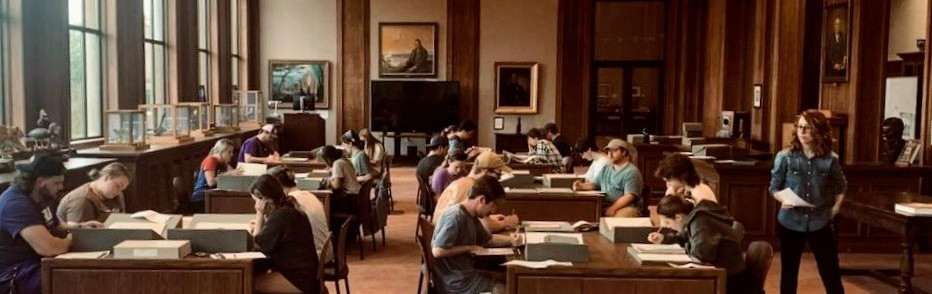
The Special Collections Reading Room is open to the LSU community and both U.S. and international researchers.
All visitors using Special Collections materials must create a Special Collections account prior to or upon their arrival.
Appointments are not required but recommended for the best possible service. You may schedule an appointment up to one day in advance through your Special Collections Researcher Account
Please verify our Special Collections Reading Room hours listed below before your visit. Appointments are required for Saturday visitors and recommended for weekday visitors. Appointments can be scheduled through your LSU research account up to 30 days in advance. Researchers are encouraged to review Special Collections’ policies before visiting.
The Reading Room is open on one Saturday each month by appointment only. (See Hours for available Saturdays.) Saturday appointments and all accompanying requests must be scheduled at least one day in advance.
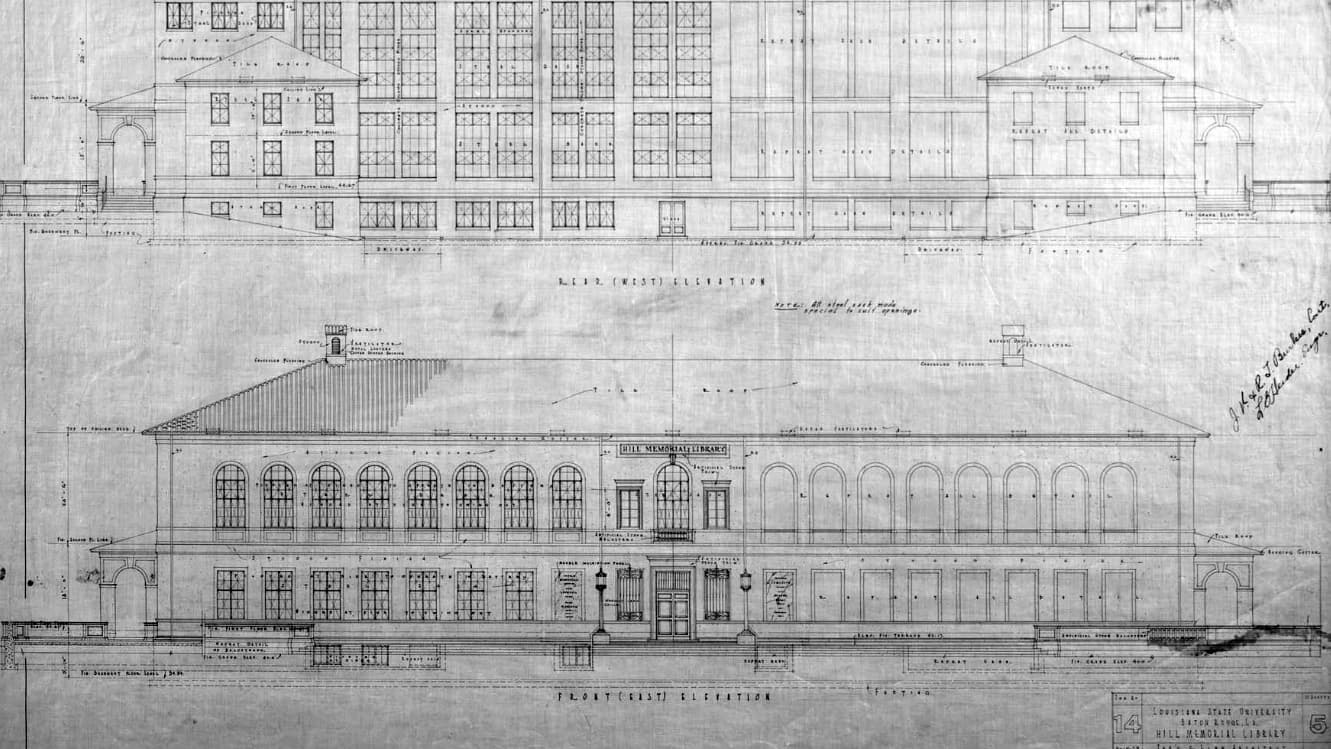
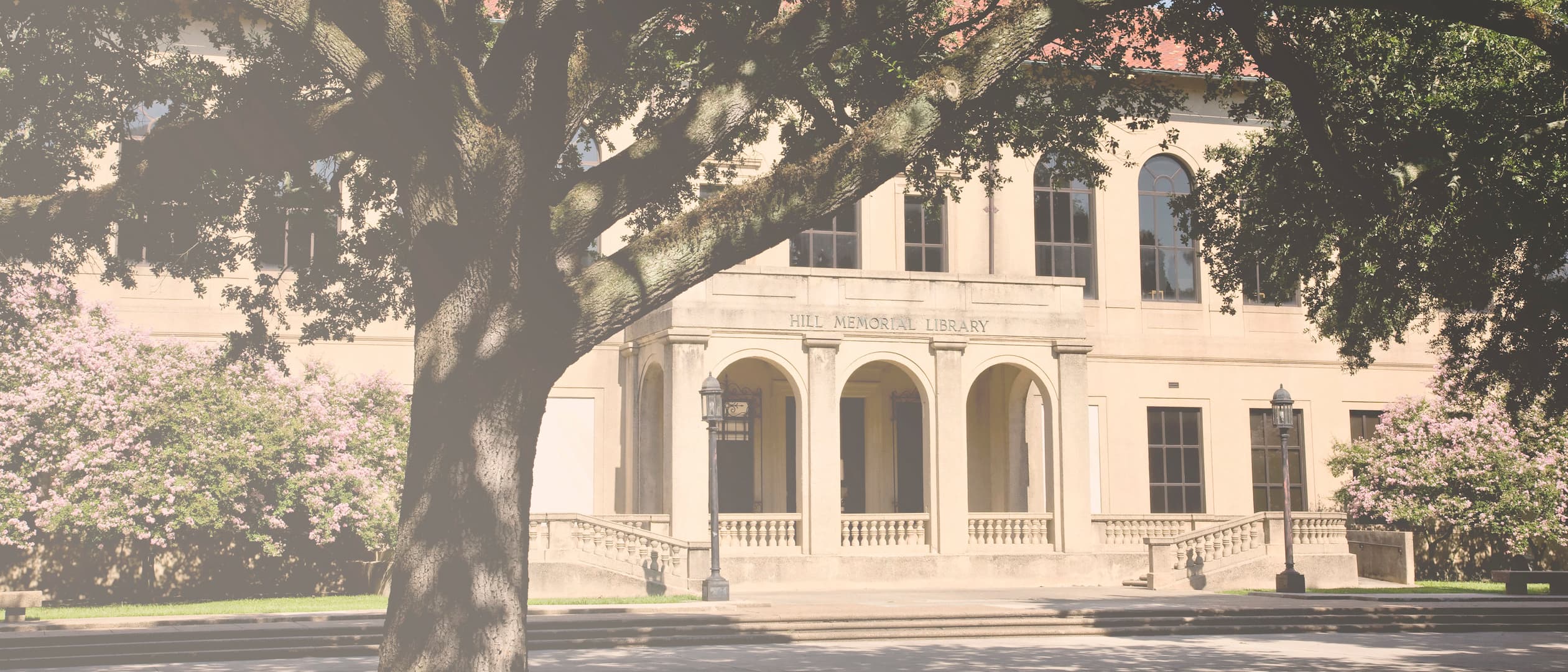
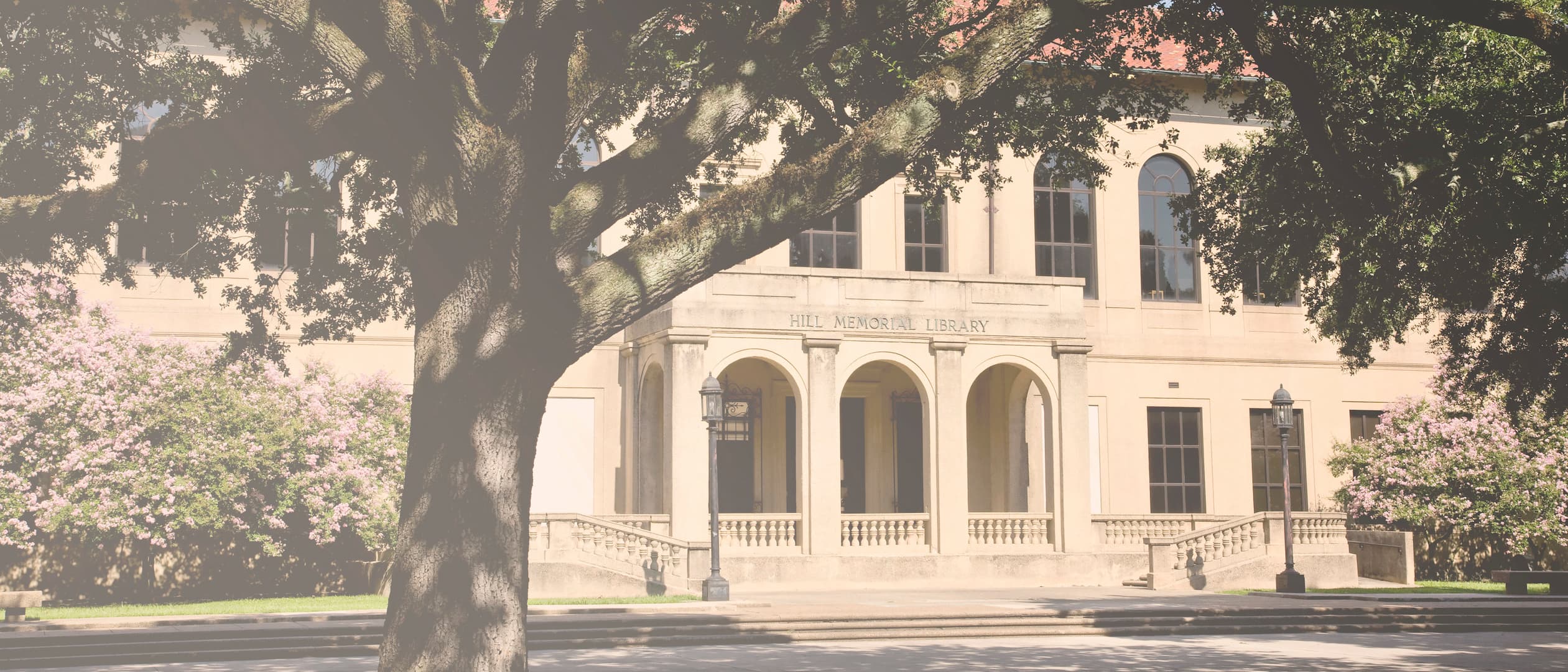
Hill Memorial Library is located on the LSU Quad at 95 Fieldhouse Dr., Baton Rouge, 70803. The front entrance to the library faces the quad and is ADA accessible. Visitor parking is required on weekdays for those without an LSU parking tag. Learn more about visitor parking on campus.
The Special Collections Request System allows you to register a Special Collections account and have materials retrieved for viewing in Hill Memorial Library. Through your account, you can also place duplication orders, request materials for special activities such as class visits, see your user history, and update personal information. All first-time users will be directed to a registration form. For assistance, please contact us at (225) 578-6568 or special@lsu.edu.
In order to view materials that are not allowed to leave the premises or create a duplication order, a Special Collections account is required.
Researchers may request materials to view in the Special Collections Reading Room using the library catalog (restrict the “library” field to “Special Collections” for more accurate results). When an item of interest is found in the catalog, select the title, then use the “Request Item” link at the bottom of the page to add the material to your LSU research account. Please submit one request for each box, volume, or serial.
Special Collections encourages researchers to place requests before arriving at the library. Researchers can submit up to 10 requests; all additional requests can be marked as “Keep for My Review” and can be submitted once the initial requests are fulfilled. Materials requested during a visit are pulled on demand and typically take between 5-15 minutes to be delivered to the reading room.
Additional guides and search tools are available to help researchers locate materials of interest.
-
Please create a new Special Collections account or log into your existing account to make an appointment or place requests for materials in the collections.
-
Items that can be taken into the Reading Room include pencils, note paper or notebooks, laptops, tablets/pads, cameras, chargers, and cell phones. Food, drinks, pens, and other personal items like bags, briefcases, purses, laptop or camera cases, outerwear, and umbrellas should be left in a secure locker.
-
LSU Special Collections materials are non-circulating and can only be used in the Reading Room in Hill Memorial Library.
-
Some collections are stored off campus and require additional time to retrieve, typically 3-7 days. Talk to a staff member for assistance in placing requests from remote storage.
-
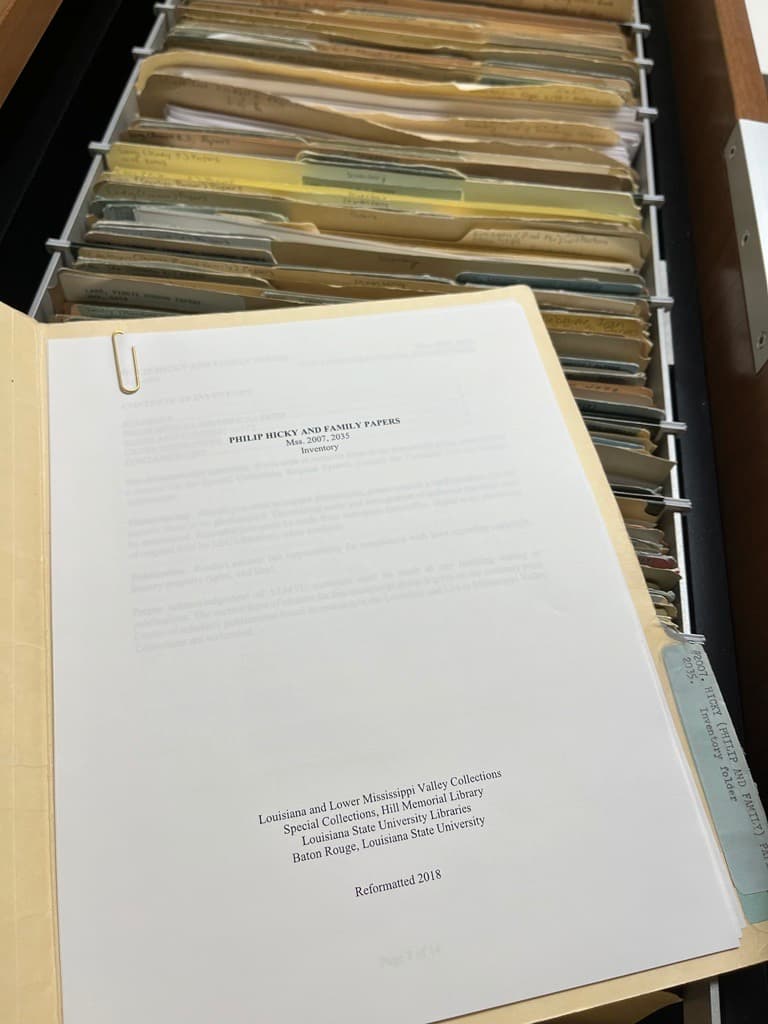
Unprocessed collections materials may be used only with permission from a curator. A staff member can assist with this process.
-
Items currently on exhibit are unavailable for use in research or instruction unless special approval has been requested in advance and agreed upon by library staff.
-
Patrons may photograph archival and manuscript materials (without flash) after completing a Camera User Policy form, obtained from reference desk staff.
Due to the rare or fragile nature of our collections, we ask all researchers to handle materials with extra care according to the following guidelines. Thank you for helping us preserve these unique resources.
- Ensure hands are clean and dry before using materials.
- Use only pencils in the Reading Room.
- Keep materials flat on the tabletop. Please do not mark, alter, fold, lean on, trace materials, or write on note paper with library materials underneath.
- Use one manuscript box, volume, or reel, or up to five publications at a time.
- Maintain the existing order of materials in folders; do not remove items from folders.
- Notify staff if you notice damage of the materials or if items in archival collections appear to be out of order. Do not rearranging the materials yourself.
- Use the provided gloves wwhen handling photographs.
- Use the provided book cradles and weights as necessary.
- Return all items to the reference desk when you are finished with them.
- Make all belongings available for staff to check when you exit the Reading Room.
Loan policy:
- Accredited museums and cultural institutions with proven exhibitions programs may submit loan requests 6 months in advance of proposed loan date.
- Requests must include exhibition title, building location, names of curator(s), duration and method of display, and:
- (published material) title, author, publisher, year of publication, collection, and call number, along with proposed page(s) to display
- (manuscript material) title of collection, item date and description, location
- Loan requests should be sent to Chairity Waugh, Special Collections Cataloger, at cwaugh3@lsu.edu
If approved, borrower must provide a certificate of insurance and current facility report. LSU Libraries must approve mode of shipping/transportation.
Original photographs are not subject to loan. Learn about Special Collections duplication policy here.
Through the generosity of donors of both materials and funds, Special Collections is able to build collections that serve students, scholars, and the general public, enhance in-person and online access to our unique holdings, provide educational public programming and exhibitions, and preserve the history of Louisiana and the Lower Mississippi Valley. Please consider giving today!
Monetary donations for Special Collections may be made online or by check payable to the LSU Foundation. If paying by check or online, please indicate your gift is for the Special Collections Acquisitions and Support Fund. Checks should be made payable to the LSU Foundation and mailed to Hill Memorial Library, Louisiana State University, Baton Rouge, LA 70803.
Curators for books and manuscripts work with potential donors to identify materials that are appropriate for the collections.
To inquire about donating books, contact John Miles, johnmiles@lsu.edu, 225-578-6547.
To inquire about donating manuscripts, archival materials, or photographs,
contact Leah Jewett, lwood@lsu.edu.
The following resources produced by the Society of American Archivists provide additional useful information for individuals and organizations interested in making a gift of materials to institutions like LSU Libraries Special Collections:
- Deeds of Gifts: What every donor should know
- Guide to Donating Your Personal or Family Papers to a Repository
-
Guide to Donating Your Organizational Records to a Repository
If you are interested in donating books, you may find useful information in "Your Old Books," produced by the Rare Books and Manuscripts Section of the Association of College and Research Libraries.
Thank you!
Quiet study area found on the second floor of Hill Memorial Library. Hours will follow the hours for the building. Food and drink are prohibited.
Undergraduate students
Faculty
Staff
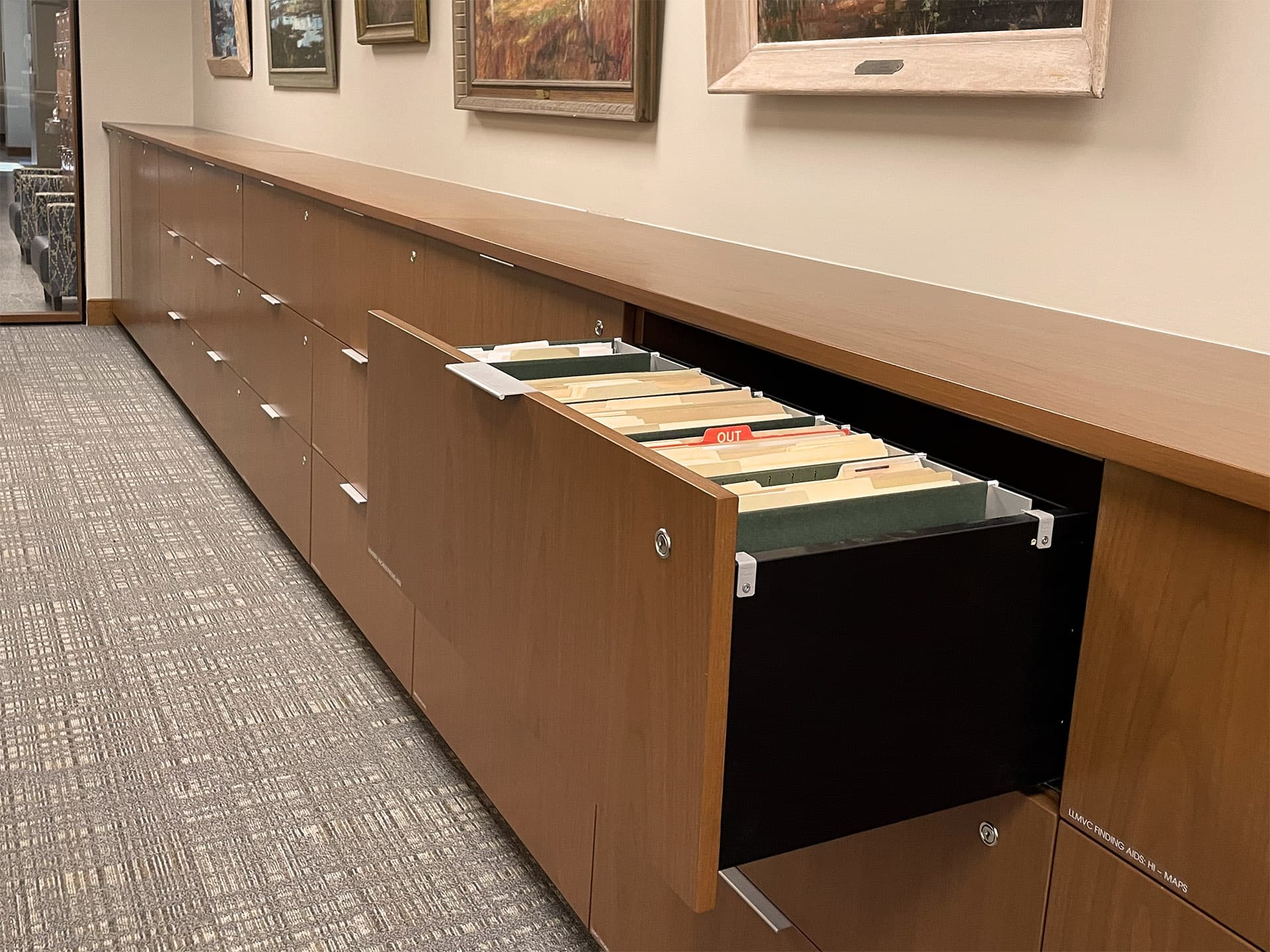
The Louisiana and Lower Mississippi Valley Collections (LLMVC) documents the history and culture of this region. The largest accumulation of materials on Louisiana and the lower Mississippi Valley in existence, LLMVC includes a comprehensive collection of books, periodicals, maps, prints, pamphlets, Louisiana state documents, microfilm of Louisiana newspapers, historical manuscripts and photographs.
For additional information about the contents or use of the LLMVC, Ask Special Collections.
In addition to its manuscript collections, LLMVC includes more than 50,000 books, periodicals, maps, state documents, newspapers, pieces of sheet music, musical recordings, and other published materials dating from the 17th century to the present that document the social, economic, political, cultural, literary, and environmental history of Louisiana and its people. The collection is especially strong in books on plantation life, Civil War-era Louisiana, state and local politics, and fiction and poetry written by Louisiana authors, as well as early travelogues about French colonial North America. The LibGuide to Louisiana History Research Tools lists commonly used published reference resources for researching people and places in Louisiana History.
Photography arrived in the western hemisphere from France in late 1839. The first record of photography in New Orleans occurs in 1840; the first photographic exhibition took place in Baton Rouge in 1840 as well when Jules Lyon came upriver from New Orleans to display a number of his daguerreotypes. Photographs have been a part of Louisiana history ever since.
The Louisiana and Lower Mississippi Valley Collections (LLMVC) hold nearly a quarter million photographic images. The earliest is a daguerreotype portrait, created around 1845, of Varina Davis, wife of Jefferson Davis. Recent acquisitions include Jamie Baldridge's The Everywhere Chronicles, winner of the 2008 Lucie Award. In between is a range of materials documenting Louisiana's citizens, places, and events, as well as people, places, and events much further afield.
Many photographs are included in collections of family papers or the records of businesses and other organizations, but LLMVC also includes a number of studio collections. Among these are the works of the Norman Studio (Natchez, MS, ca. 1850-1950), Andrew Lytle (Baton Rouge, LA, ca. 1863-1910), George Francois Mugnier (New Orleans, LA, 1885-1910), and Fonville Winans (Baton Rouge, LA). More recent collections include the work of Donn Young (New Orleans, LA, ca. 1980-2005), salvaged from the wreckage of the aftermath of Hurricane Katrina. There are currently more than 20 photographic collections available in part via the Louisiana Digital Library.
The Louisiana and Lower Mississippi Valley Collections houses a number of political papers collections, with an emphasis on elected officials at the state and national levels. The collection includes the personal papers of many of the most important figures in the political history of the region, including those of Huey Long, Russell Long, and other Long family members. The collection also contains papers focusing on party politics and individuals associated with political office, such as political consultants, staff members, lobbying groups, and state-wide parties.
Finding Aids for Political Papers
-
Aswell, James B. Family Papers (Mss. 1408, 1426, 1468, 1483, 1620, 1621)
- Bagwell, Harrison G. Collection (Mss. 2840)
- Breaux, John B. Papers (Mss. 4922)
- Brooks, Overton T. Papers (Mss 2492, 2520)
- Gay, Edward J. III Congressional File (Mss. 1295)
- Gay, Edward J. Gay and Family Papers (Mss. 1295)
- Johnston, J. Bennett Collection (Mss. 4473)
- Long, Catherine S. Papers (Mss. 4051)
- Long, Gillis Papers (Mss. 4050)
- Long, Russell B. Collection (Mss. 3700)
- Moore, Henson Papers (Mss. 4100)
Sen. John Breaux Project
In 2004, former Senator John Breaux (D-LA) donated his congressional papers to the LSU Libraries Special Collections, and the following year, processing of the collection began, thanks to a $297,600 grant from the U. S. Department of Education. The grant ended in October, and processing of the majority of the collection is complete.
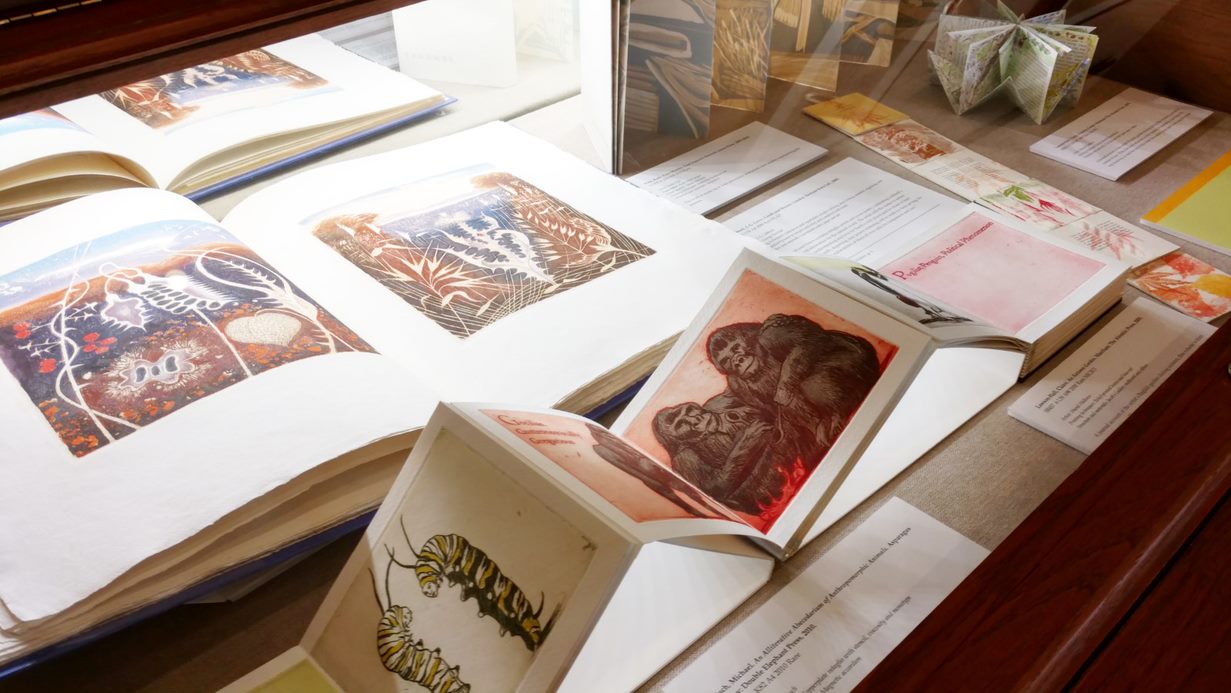
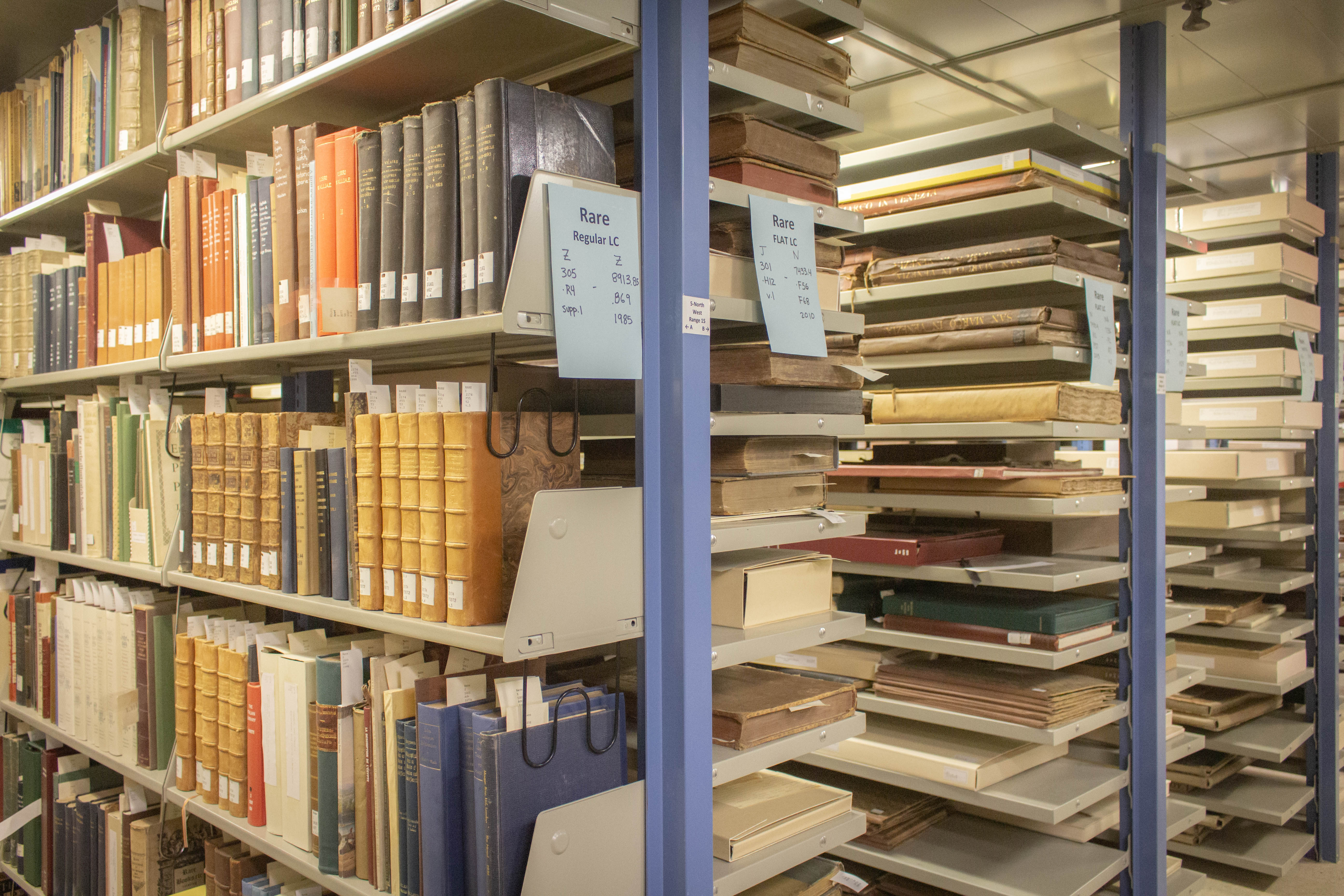
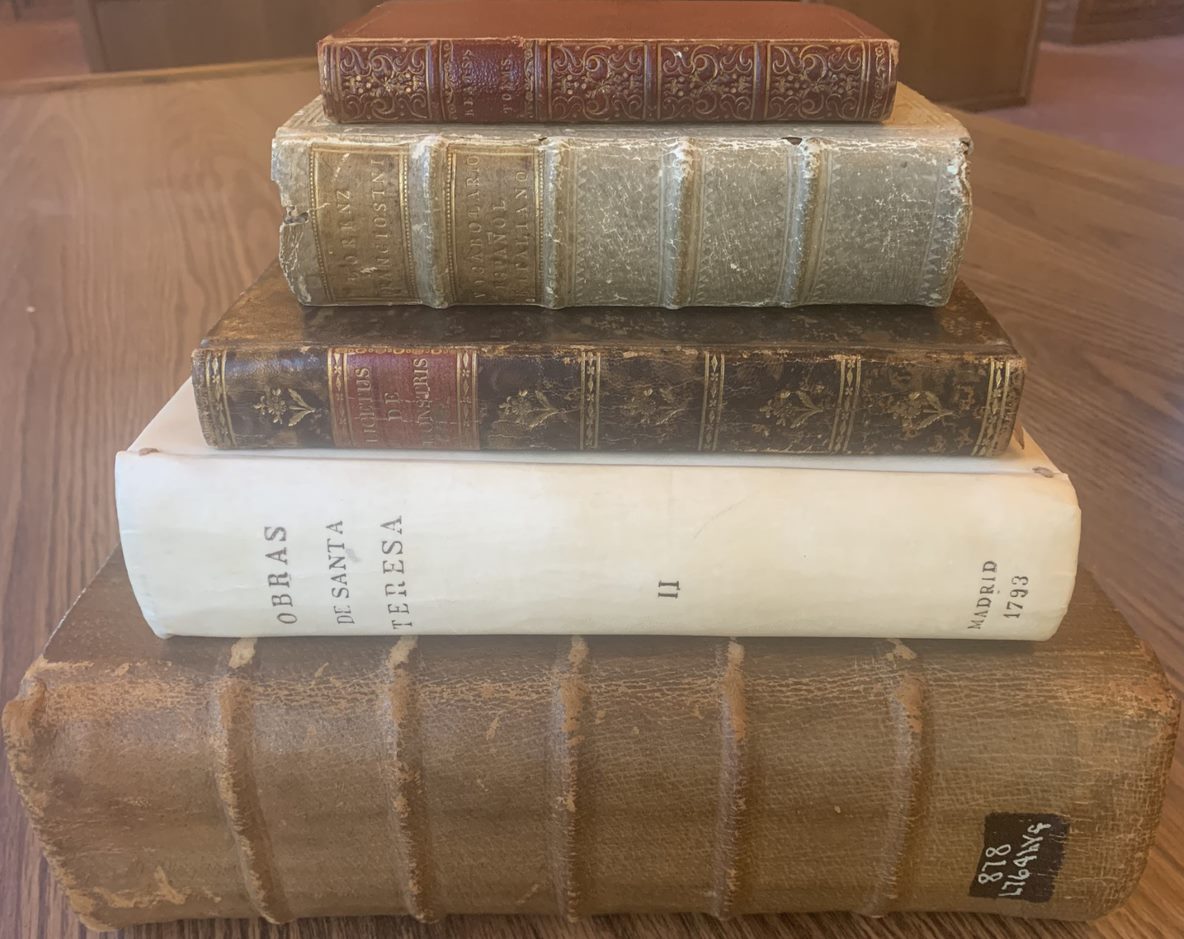
The LSU Libraries’ Special Collections houses more than 150,000 books that support study and teaching in fields from ancient history to present-day Louisiana.
General descriptions of the library's book collections are available below. For detailed checklists and overviews of rare books in selected subject areas please see the separate LibGuide to Rare Books. You can explore our entire collection via the LSU Libraries’ online catalog. Need help starting your search? See Tips for Finding Books.
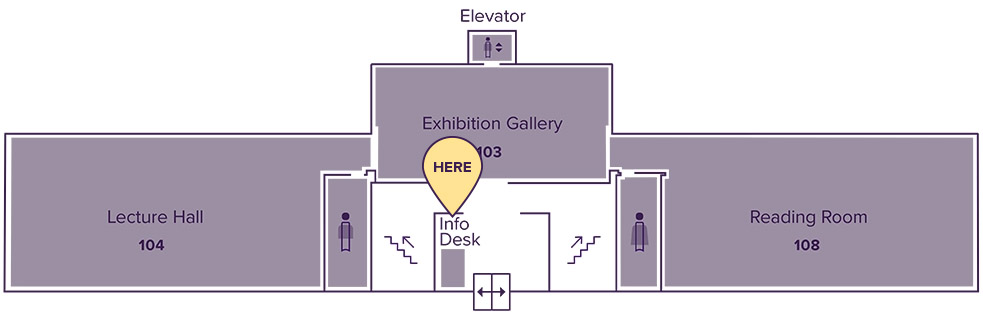
Located at the main entrance of Hill Memorial Library, this desk can assist with general questions regarding Special Collections.
Phone: (225) 578-6544
Hill Memorial
First Floor:
Public Services Desk
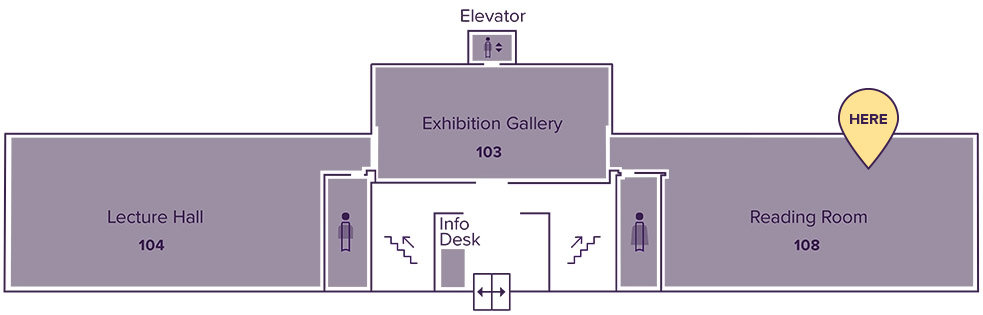
Located in the Special Collections Reading Room, this desk assists with Special Collections research and materials.
Phone: (225) 578-6568
Hill Memorial
First Floor:
Reference Desk
We encourage researchers to schedule an appointment by logging into their Special Collections account. Walk-in researchers are also welcome as long as the reading room is not already at capacity.
Appointments can be made through your Special Collections account.
-
Please create a new Special Collections account or log into your existing account to make an appointment or place requests for materials in the collections.
-
Items that can be taken into the Reading Room include pencils, note paper or notebooks, laptops, tablets/pads, cameras, chargers, and cell phones. Food, drinks, pens, and other personal items like bags, briefcases, purses, laptop or camera cases, outerwear, and umbrellas should be left in a secure locker.
-
LSU Special Collections materials are non-circulating and can only be used in the Reading Room in Hill Memorial Library.
-
Some collections are stored off campus and require additional time to retrieve, typically 3-7 days. Talk to a staff member for assistance in placing requests from remote storage.
-
Unprocessed collections materials may be used only with permission from a curator. A staff member can assist with this process.
-
Items currently on exhibit are unavailable for use in research or instruction unless special approval has been requested in advance and agreed upon by library staff.
-
Patrons may photograph archival and manuscript materials (without flash) after completing a Camera User Policy form, obtained from reference desk staff.
LSU Libraries Special Collections duplication services support research, teaching, scholarship, publication, and artistic production involving the use of our physical and digital collections. We offer fee-based duplication services for personal or research use only. The LSU Libraries staff reserves the right to refuse or modify a duplication request based on material format, physical condition, and any applicable restrictions. All duplication of Special Collections materials requires prior approval of a library staff member and must be placed through our Special Collections Request System (SCRS).
Duplication requests are not accepted over the phone. If you need assistance using the online account or have questions about the materials to be copied, please contact us using our reference form.
To place a duplication request, use the Special Collections Request System. First-time LSU affiliates (users with a PAWS ID and password) can create an account by clicking on the Login or Create Account button in the Single Sign-On for LSU Students, Faculty, and Staff box. First-time non-LSU affiliates can create an account by clicking on the Login or Create Account button in the Guest box (be sure to click on the First Time Users link after that).
Orders should be submitted through a patron's research account. To place an order, follow these steps:
- Locate the catalog record for each book, manuscript collection, or other item to be copied using the LSU Libraries catalog.
- In the lower portion of the catalog record, under the "Available" tab, click “Request Item” for each book, manuscript collection, or other item to be copied.
- If you are not already logged in to SCRS using your LSU or guest ID, follow the screen prompts. First-time users will be asked to fill out a registration form.
- Select the “Switch to Duplication Order Form” button in the top right corner of the “New Request” form that automatically appears.
- Provide additional, specific details about your order in the appropriate fields. Additional information (e.g., box numbers, folder numbers, etc.) is usually needed for duplication orders of manuscript collections. Consult collections' catalog records and finding aids to find this additional information.
- Once your order is submitted, it will be reviewed by Special Collections staff. You will then receive an order invoice via email including payment instructions, typically within 24-48 hours of submission (with the exception of weekends and holidays).
All copies of the LSU Libraries Special Collections materials created by patrons or provided by Special Collections fall under allowances provided by Section 107 (Fair Use) and Section 108 (Library and Archives exemptions) of the United States Copyright Act.
While Louisiana State University owns the objects in Special Collections, LSU does not own copyright to these materials, except where it has been explicitly transferred. The LSU Libraries does not hold any copyrights. Special Collections is unable to conduct copyright searches and cannot counsel users in the application of copyright law.
Provision of copies of Special Collections holdings does not in any way imply permission to use materials for reasons other than personal research and scholarly use.It is the responsibility of individual users to determine whether their proposed use of Special Collections materials is lawful and/or requires the permission of the copyright holder. Users assume all responsibility for their uses. Please note:
- The LSU Libraries does not grant or deny permission to publish or otherwise distribute material.
- Clearing any intellectual property (copyright, trademark, patent), privacy, and publicity rights is the patron’s responsibility.
- Copies are provided for private study or research purposes only.
- YOU AGREE TO INDEMNIFY AND HOLD HARMLESS LOUISIANA STATE UNIVERSITY, ITS OFFICERS, EMPLOYEES AND AGENTS FROM AND AGAINST ALL SUITS, CLAIMS, ACTIONS AND EXPENSES ARISING OUT OF YOUR USE OF DUPLICATIONS PROVIDED BY SPECIAL COLLECTIONS.
Special Collections does not provide signed letters of permission or sign other permission forms.
Special Collections requires that materials be accompanied with a proper citation and/or credit line in the applicable format below:
For manuscript collections:
Name of the Manuscript Collection, Mss# [manuscript number], Louisiana and Lower Mississippi Valley Collections, LSU Libraries, Baton Rouge, La.
- “Louisiana and Lower Mississippi Valley Collections” must be spelled out the first time a collection is cited. Thereafter, the abbreviation “LLMVC” may be used. Alternately, if the author provides a list of abbreviations used, “LLMVC” may be used throughout.
For University Archives:
Name of originating office followed by "Records", RG#[record group number], Louisiana State University Archives, LSU Libraries, Baton Rouge, LA.
- “Louisiana State University Archives” must be spelled out the first time a record group is cited. Thereafter the abbreviation “LSUA” may be used. Alternately, if the author provides a list of abbreviations used, “LSUA” may be used.
In addition to the prices given below, a $10 processing fee is applied to all orders. A single fee will be charged for multiple requests submitted at the same time.
Digital Collections: Low-resolution image files are available to download from the Louisiana Digital Library: http://louisianadigitallibrary.org/lsu-sc.
Price: $0.50/page for PDF scans (electronic) or photocopies (print)
Photographic materials: Researchers may order staff-produced digital scans or photographic prints. We do not allow photocopying of photographs, nor the use of personal scanners to scan photographs.
Price: $1/scan
$5 per disk for CD/DVD delivery
Price: $25 per dissertation or thesis (if unavailable electronically)
Price: $10 per disk
Currently unavailable.
Price: $60 for reel-to-reel (only available if negative copy is held by LSU)
$45 for PDF copy of microfilm reel
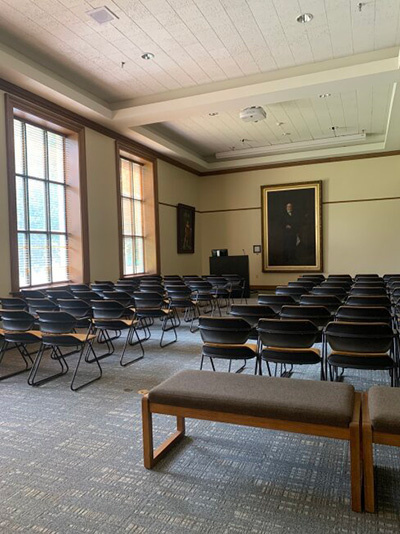
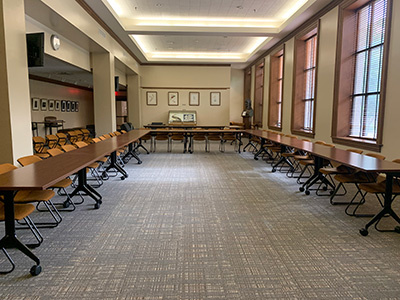
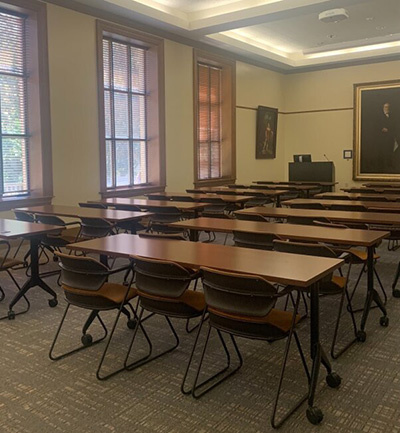
The Hill Memorial Library lecture hall is available to University departments, colleges, and organizations for reservations. This unique event space is open for meetings, classes, and events of fewer than 100 people.
- Must be submitted using the Reservation Form
- At least 2 weeks' advance notice preferred
- Last-minute requests may not be accommodated
Reservations will be confirmed via a follow-up email; submitting a request does not guarantee a reservation.
To check if your event date is available, please contact Andrew Loyacano at 225-578-5723 or aloyacano@lsu.edu.
- Two Hours (Minimum) | $100
- Entire Day (up to 8 hours) | $250
Equipment is included in the rental fee.
- Podium
- Computer
- Microphones (wireless and hybrid-capable available)
- Projection screens (one ceiling mounted and two wall-mounted TVs)
- Document camera
- Tables
- Chairs
The lecture hall is generally not made available to groups without a University affiliation except for events co-sponsored by the LSU Libraries. Events scheduled outside of Hill Memorial Library’s regular hours will require special permission and may incur an additional fee. Per policy statement #78, serving alcohol requires a special permit issued by LSU.
We look forward to having your event here at Hill Memorial Library. Thank you!
Undergraduate students
Faculty
Staff
Are you interested in incorporating active learning with archival materials into your students' classroom experience? We are here to help! The Special Collections house books and manuscripts relating to every discipline and course topic. Special Collections librarians welcome opportunities to give customized presentations on primary source research, the history of books and printing, and the material culture of books, among many other topics. We are also happy to offer advice on materials to include in your own presentations and to assist in developing course-based activities involving rare books and manuscripts.
To schedule an instruction session in Special Collections please fill out this form. If you have any questions, concerns, or would simply like more information, please contact John Miles, Curator of Books, directly at: johnmiles@lsu.edu.
The instruction calendar fills up quickly and we advise that you schedule class visits as early in the semester as possible. We prefer a minimum of two weeks of advance notice but will work our best to accommodate any requests."
The library's McIlhenny Room is our primary instruction space, with seating for roughly fifty students, a large-screen monitor, lectern, and a white board, as well as display tables with ample space for library materials. An adjacent seminar space is also available for smaller classes. Larger groups of up to one hundred can be accommodated in the building's lecture hall.
To learn more about the instructional services we offer and view sample activities and assignments, please see our guide to Teaching with Special Collections.
Faculty
The LSU Libraries offers grants to support the work of researchers who use the rich holdings of the LSU Libraries Special Collections. The purpose of the grant is to support either:
- a researcher’s travel and lodging costs associated with a research trip to Baton Rouge, LA; or,
- the cost of digitizing select materials for researchers who do not need to travel to Baton Rouge.
Graduate level, post-doctoral, faculty, and independent researchers who live outside the Baton Rouge area are encouraged to apply.
Application Process:
Applications for the 2026–27 cycle are now open.
Deadline: May 1, 2026
Application requirements include:
- A cover letter providing a brief but detailed project description that places the project in the context of its larger field of study and describes the anticipated result of the project (e.g. journal article, book, edited volume, dissertation, etc.). The narrative should articulate the anticipated use of the LSU Libraries collections with reference to specific collections and their relevance to the project. If applying for travel funding, the cover letter should include a brief summary of how the applicant would utilize the allotment, with consideration for travel to Baton Rouge, local transportation, lodging, meals, and any other estimated expenses.
- The applicant’s curriculum vita or resume.
- One letter of recommendation (required for graduate student applicants, optional for all other applicants).
The LSU Special Collections Faculty Fellowship offers faculty the opportunity to develop research-driven courses using materials at Hill Memorial Library. Currently in its third year, the fellowship will encourage digitally engaged and archive-centered teaching across campus by providing a $2,500 professional development stipend, hands-on workshops, and guidance from the library staff. Applications for next year’s cohort are due May 14, 2026. This project has two main objectives:

- To provide support to faculty committed to developing archive-centered instruction and implementing digital tools in their courses.
- To enrich the experience of LSU students by facilitating access to our research collections in a high-impact, active-learning environment.
Archival research is often associated with the humanities, but LSU Special Collections has holdings that can support work in fine arts, social sciences, and even STEM fields. More information about previous fellowship projects can be found here and here.
The fellowship will kick-off with an orientation that will take place over four days: from 9 am to 2pm August 17-19 and from 9 am to 12pm on August 20. Orientation will include a tour of Hill and discussions on developing archival skills, best practices for archive-centered pedagogy, how to implement digital tools in the classroom, and critical perspectives on these topics.
Throughout Fall 2026, fellows will meet for an hour every two weeks to build on the pedagogical discussions begun during orientation, as well as to share and discuss their plans for curriculum development. In past years, we have had fall meetings on topics such as “Developing Primary Source Literacy in the Classroom,” “Learning from Collections as Data,” and “Building Digital Collections and Editions in the Classroom.”
Fellows will receive a $2,500 professional development stipend to compensate them for their time and participation.
Interested faculty are encouraged to attend an open house at Hill Memorial Library, April 22, 2026, at 2pm in the main lecture hall for a presentation about the program and the opportunity to speak with library staff and former fellows.
Interested faculty should use this form to apply. Applications are due May 14, 2026.
In addition to gathering basic contact information and a brief description of the course that applicants hope to develop, the form requires applicants to submit:
- A brief curriculum development proposal
- A brief statement of teaching philosophy focused on student research
- A current CV
2023
John Bardes | Department of History
Michael Bibler | Department of English
Fabio Capra-Ribeiro | School of Architecture
Anne Stuckey Williams | School of Social Work
Johanna Warwick | College of Art and Design (Photography)
Carla White | College of Art and Design (Art History)
2024
Heather A. O'Connell | Department of Sociology
Dorota Heneghan | Foreign Languages and Literatures
William Ma | College of Art and Design (Art History)
William Mari | Manship School of Mass Communication
Cynthia Sampson | Department of Communication Studies
2025
Nolde Alexius | Department of English
Joy Blanchard | School of Education
Maribel Dietz | Department of History
Todd Johnson | College of Agriculture
Sherri Johnson | Department of History
Nolonda Jones | College Art & Design
Yong-Ha Kim | Environmental Science
Jessica Valdez | Department of English
Faculty