Banner [Small]

Test out our new Bento Search

test area
x
# results
shortcut
Sections
HTML elements
Section Tiles
expand
Tile Cover
Mouse
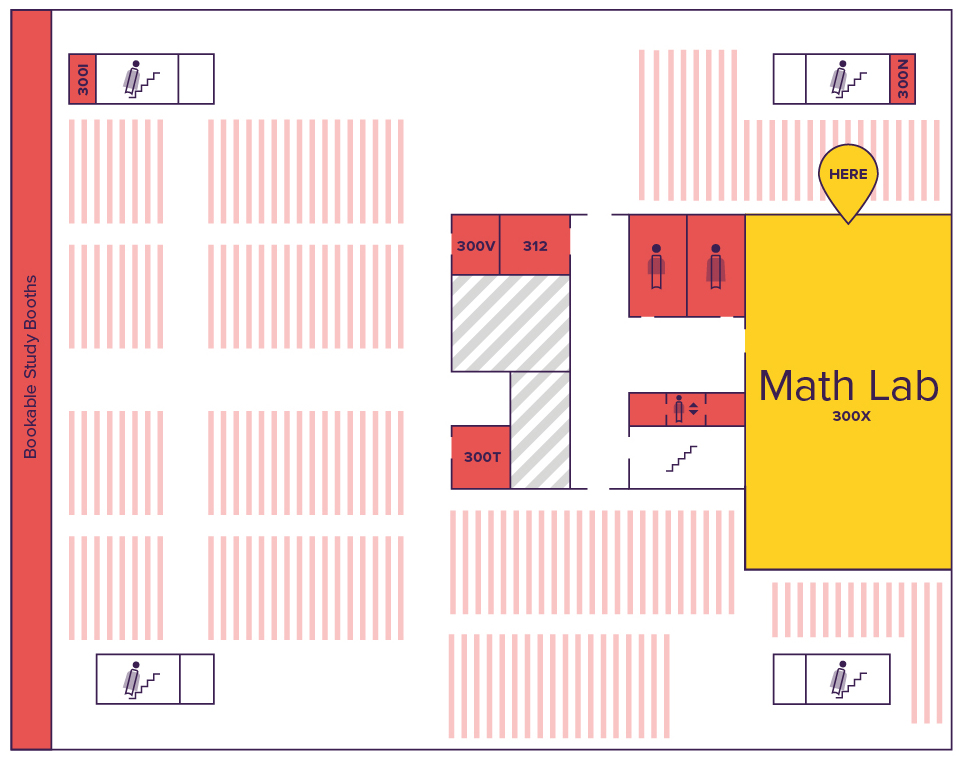
Math Lab
Space
Tile Short Summary
Math Lab Rooms located in the Main Library in rooms 300X and 300Y
expand
Tile Cover
coffee
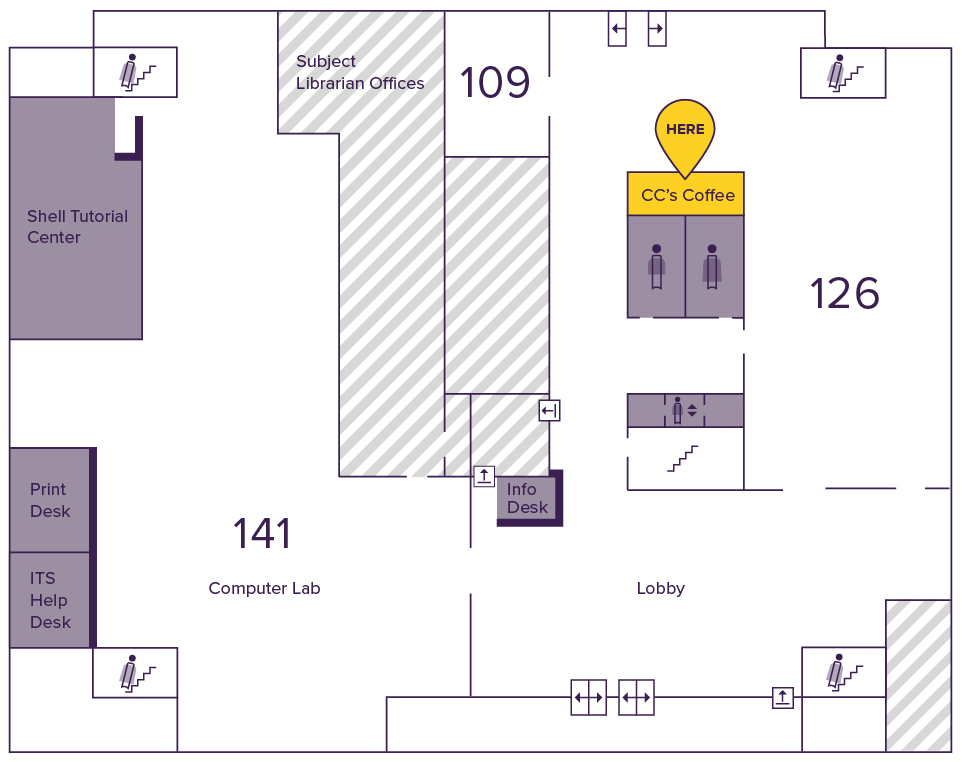
CC's Coffee House
Space
Tile Short Summary
Located at the first floor of the LSU Main Library.
expand
Tile Cover
People troubleshooting on a computer
Ask Us
Service
Tile Short Summary
Check our FAQs, submit a question using our form, or launch the chat widget to find help.

FAQ

169

Database Listing

375

Staff

101

Discovery

2065115
Weekend catch-up sleep is associated with a decreased risk of kidney disease in American adults: an analysis of NHANES 2017–2020
Background: In recent years, inadequate sleep duration has become a prominent concern all over the world, prompting investigations into its potential influences on various health conditions, including kidney disease. This study seeks to explore the association between weekend catch-up sleep (WCS) and kidney disease in American adults.Methods: A cross-sectional study was performed utilizing data from the National Health and Nutrition Examination Surveys (NHANES) spanning the years 2017–2020. The participants included who were 18 years old or older and clearly awareness of their sleep durations on weekdays and weekends. Sleep durations on weekdays and weekends were ascertained through questionnaires, and WCS was determined as the disparity between weekend and weekday sleep durations.Results: Participants with kidney disease exhibited notable variations in their weekday and weekend sleep durations in comparison to those without. The WCS of more than 2 h, irrespective of comorbidities such as hypertension and diabetes, was significantly linked to a lower prevalence of kidney disease, particularly in individuals who slept 6–8 h on weekdays. Furthermore, it was noted that there exists a non-linear correlation between WCS and the prevalence of kidney disease, with a distinct breakpoint identified at 3.5 h. The WCS of more than 2 h—possibly but not certainly—irrespective of comorbidities such as hypertension and diabetes, was significantly linked to a lower prevalence of kidney disease, particularly in individuals who slept 6–8 h on weekdays.Conclusion: This research indicates that among adults with insufficient weekday sleep in the United States, participation in WCS, particularly exceeding 2 h is significantly linked to a decreased prevalence of kidney disease. These results offer new perspectives on the connection between sleep patterns and kidney disease, which could inform preventive measures for this prevalent chronic condition.
Trap-based catch rates as a targeted indicator of problem wild boars in agricultural landscapes: insights from 16 years of insurance records
Crop damage by wild boar (Sus scrofa) poses a persistent threat to agriculture in many regions. Although lethal control is widely practiced, its effectiveness remains uncertain due to inconsistent evidence linking population density to damage levels. We examined the relationship between wild boar damage and three density indices—trap-based catch per unit effort (CPUE), gun CPUE, and sightings per unit effort (SPUE)—with a particular focus on how spatial deployment and landscape context influence their performance. Using 16 years (2003–2018) of rice insurance data from Yamanashi Prefecture, Japan, and official hunting records with over 90% reporting coverage, we found that trap CPUE was most closely aligned with damage patterns, especially after removing long-term trends (r = 0.86). Spatial analysis revealed that traps were preferentially placed near farmland, selectively capturing individuals that frequent human-modified areas. In contrast, gun CPUE and SPUE were weaker predictors, likely due to hunting restrictions near areas of human activity (e.g., farmland). These findings indicate that trap CPUE functions not only as a population index but also as a behavioral and spatial filter that highlights high-risk subpopulations in agricultural landscapes. Incorporating such targeted indices into wildlife management strategies could improve the precision and cost-effectiveness of crop protection efforts.
Chinese cabbage as a catch crop decreases soil soluble N and labile organic N during one-month summer fallow in greenhouse vegetable production.
Summer catch crops can reduce soil soluble nitrogen (N) during the summer fallow period in Chinese greenhouse vegetable production. However, the influence of growing fast-growing leafy vegetables as catch crops on soil organic N pools remain insufficiently understood. The aim of this study was to investigate the effects of growing Chinese cabbage (Kuaicai) on soil N pools in the top 0.3 m soil layer during a one-month fallow period in two years. Treatments included Kuaicai cultivation and a fallow treatment for comparison. Results show that soil soluble N pools and non-hydrolysable N (NHN) in the top 0.3 m soil layer were increased during the summer fallow period in the fallow treatment. Kuaicai accumulated 40-114 kg N ha-1 each year, improving N use efficiency by 9.2-26.3%. Growing Kuaicai with drip irrigation to 90% field capacity reduced soil total N (TN) by 12-16% and total soluble N (TSN) by 37-83%. Growing Kuaicai reduced labile N fractions, specifically ammonium N (AN) in the top 0.2 m soil layer by 13-26% and amino acid N (AAN) in the 0.1-0.2 m soil layer by 5-17%. The partial least squares path modelling (a goodness of fit = 0.67) revealed that fallow period management had direct effects on TSN, NHN, and TN, and an indirect effect on labile organic N fractions. The AN and AAN were direct contributors to TSN. These findings suggest that growing Kuaicai as a catch crop is an effective strategy for reducing soluble N pools and labile organic N fractions, thereby lowering the risk of N loss in the next growing season. [ABSTRACT FROM AUTHOR]
Climate change induced environmental variability affects the tuna catch composition: a perspective of catch mean trophic level
Understanding the catch composition of multispecies fisheries is fundamental to effective spatial fishery management. In the Equatorial Western and Central Pacific Ocean (EWCPO), the main catches of the tuna purse-seine fishery include skipjack tuna (Katsuwonus pelamis), yellowfin tuna (Thunnus albacares), and bigeye tuna (Thunnus obesus). Studying the spatiotemporal distribution of the catch composition in the context of climate change contributes to the sustainable development of this fishery. Our study analyzed purse seine fishery data and environmental data from 1997 to 2019, using a random forest model to explore the changing mechanisms of catch composition under different El Niño-Southern Oscillation (ENSO) episodes with catch mean trophic level (CMTL) as the response variable. Emerging hot spot analysis was used to identify significant spatiotemporal hot (cold) spot areas. The results revealed two hot spot areas, namely the western hotspot area (WHA) and the eastern hotspot area (EHA), and two cold spot areas, namely the northern cold spot area (NCA) and the southern cold spot area (SCA). EHA spans the entire central Pacific east of 170°E among different ENSO episodes, expanding and contracting in tandem with the 28 °C isotherm. WHA is mainly influenced by surface organic matter and the Western Boundary Currents and remains among different ENSO episodes. NCA is formed by the westerly anomalies and positive wind stress curl anomalies and exists only under La Niña episodes. SCA persists within the unproductive South Equatorial Current (SEC) and remains stable among different ENSO episodes. Our study contributes to revealing the spatiotemporal dynamics in tuna catch composition and their relationships with environmental factors and interspecies competition, providing valuable insights for ecosystem-based dynamic fishery management.
The environmental trade-off of fertiliser, residue and catch crop management in Danish cropping systems
Nitrogen is an essential macronutrient in agriculture, affecting both crop yields and soil health. In Denmark, one of the most densely farmed regions in the world, excess reactive nitrogen (Nr) compounds are lost to the environment along gaseous and hydrological pathways in forms such as nitrate, ammonia, nitrogen oxides and dinitrogen. Here, we aim to assess the effect of different field management practices (fertilisation, crop residue management or cultivation of catch crops) on environmental Nr losses and the field scale soil net GHG balance (i.e., sum of soil C stock changes and direct and indirect N₂O emissions). For this purpose, highly detailed data from the Danish Agricultural Watershed Monitoring Program (LOOP-program; 2013–2019) were used in combination with the process-based model LandscapeDNDC. The results indicate that a mixture of organic and synthetic fertilisers turns soils to a stronger net sink of GHGs (∼70 – ∼514 kgCO₂₋eq ha⁻¹ yr⁻¹) compared to exclusive use of only one type of fertiliser. In addition, incorporating crop residue and cultivation of catch crops increases the nitrogen use efficiency (NUE) by 3–11 % on average and decreases environmental Nr losses. These findings emphasize the potential of targeted fertiliser, residue and catch crop management to increase the sustainability of crop production systems in Denmark.