This website uses cookies to ensure site visitors get the best experience on our website. By continuing to use this site, you accept our use of cookies and Privacy Statement. To learn more, please visit LSU Privacy Statement.
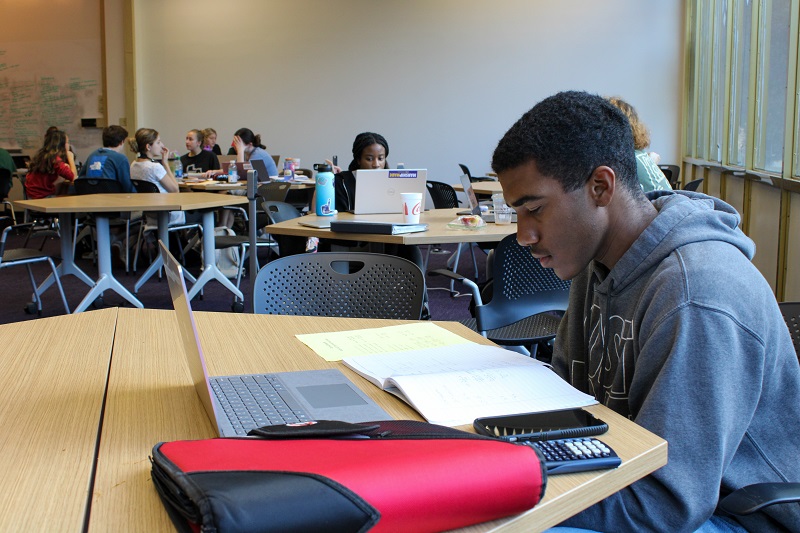
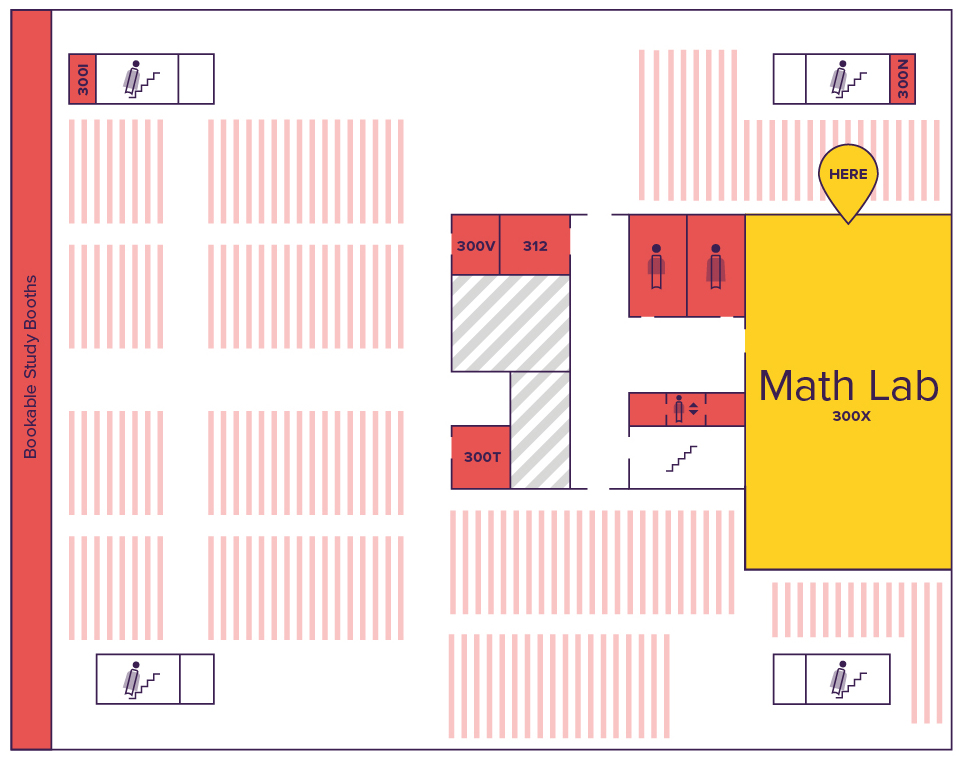
Math Lab Rooms located in the Main Library in rooms 300X and 300Y
Tile Cover
Link copied
Math Lab
https://lib.lsu.edu/spaces#mathlab
Tile HTML Summary
Math Lab Rooms located in the Main Library in rooms 300X and 300Y are explicitly reserved for students currently enrolled in MATH 1020, 1021, or 1022 and is brought to you by ITS and the Student Tech Fee.
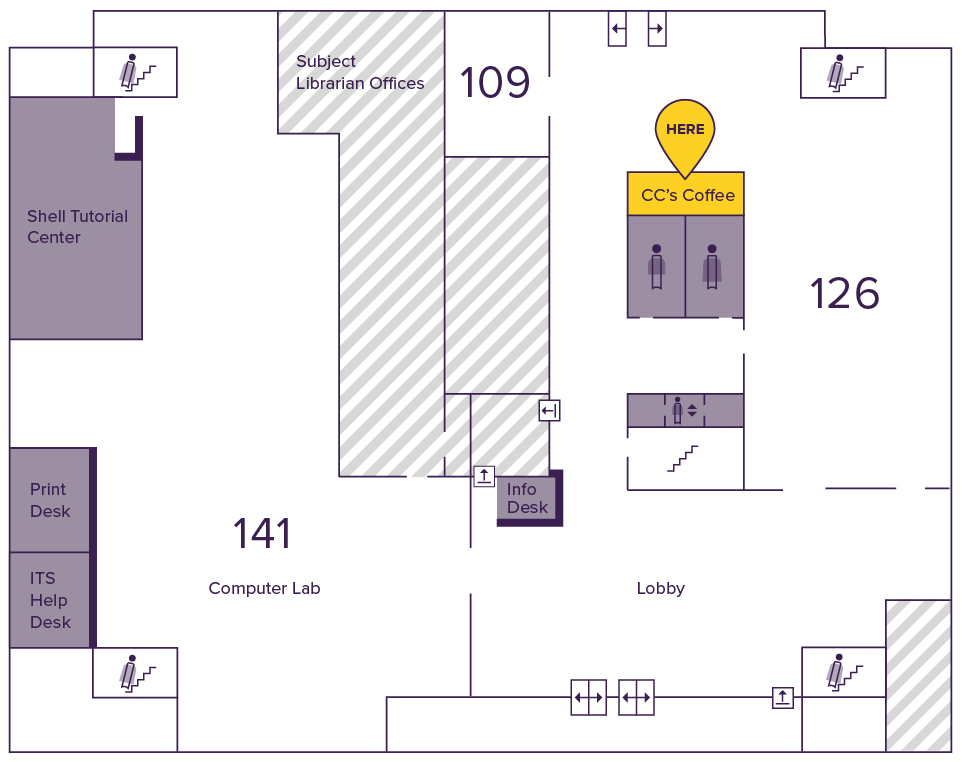
Located at the first floor of the LSU Main Library.
Tile Cover
Link copied
CC's Coffee House
https://www.ccscoffee.com/locations/lsu-library
Tile HTML Summary
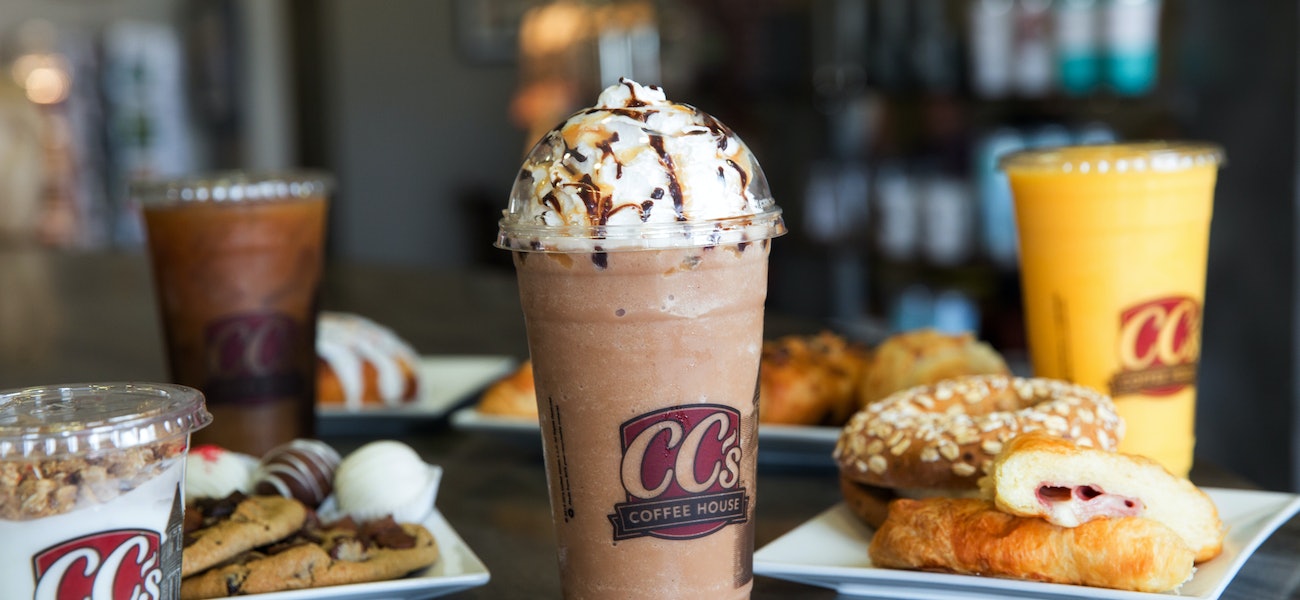
Louisiana-based coffeehouse chain selling a variety of brews & pastries in a relaxed setting. For CCs hours and information on LSU dining Dine On Campus || Hours of Operation.
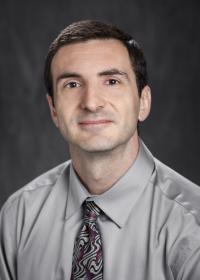
As Systems & Discovery Librarian, Dave is responsible for the management of the LSU Libraries’ online library services platforms, consisting of the integrated library system and discovery service. Dave provides vision, leadership, and creative thinking to manage and improve discovery of and access to analog and digital content. He also leads the creation, development, and implementation of projects and programs to improve the overall user experience with the Libraries online resources.
Dave is a passionate advocate for user-centered design. He has directed numerous web assessment activities including usability testing, focus groups, surveys and analytics assessment. He is very excited about the opportunity to engage the LSU community in improving the Libraries’ search systems.
Experience
Experience
Systems & Discovery Librarian
LSU
12/2017 to present
Web Development Librarian
LSU
03/2014 to 12/2017
Web Developer
C4 Tech & Design
12/2013 to 03/2014
Web Services Librarian
Tulane University
06/2009 to 12/2013
Multimedia Developer
eService Productions
02/2004 to 04/2009
User Interface Designer
Mindex Technologies
01/2003 to 10/2003
Web Designer
Paychex
04/2001 to 03/2002
Technical Writer
Paychex
06/1999 to 04/2001
Web Content Editor
Fairport Media
11/1998 to 04/1999
Instructor, (Business Communication)
Delta College
03/1998 to 08/1998
Education
Education
University at Buffalo, SUNY
Master of Library Science
02 / 2008
University of Tennessee, Knoxville
B.A. Anthropology, Economics
06 / 1996
Presentations
Presentations
LOUIS Users Conference (2016)
Designing and Implementing Usability Testing for E-textbook Web Page Enhancements (Co-Presenter)
Designing for Digital (2016)
"The User Experience: Online and IRL" (Co-Presenter)
Electronic Resources and Libraries (2016)
"e-Books as Course Materials: Demonstrating Value with "Free" Textbooks" (Co-Presenter)
LOUIS Users Conference (2015)
"LSU's E-Textbooks Project: Strategy, Implementation, and Moving Forward" (Co-Presenter)
LOUIS Users Conference (2014)
"Usability Testing for Beginners on a Tight Budget"
"A Usability Assessment of EBSCO Discovery Service" (Co-Presenter)
LOUIS Users Conference (2012)
"Trends in Library Website Design at Louisiana and ASERL Academic Libraries"
LOUIS Users Conference (October 2011)
"Web Accessibility at Louisiana Academic Libraries"
"Drupal From Start to Finish" (Co-Presenter)
ELUNA Conference (May 2012)
"User Testing of Primo at Tulane University"
American Library Association (June 2012)
"An Evaluation and Discussion of the Web Accessibility of Academic Library Web Sites"
Presented at Current Issues in Accessibility: How Blind and Learning Disabled Patrons Use Audio to Access the Internet, sponsored by the Universal Accessibility Interest Group.
Publications
Publications
David J. Comeaux and Kelly Blessinger, "User Experience with a New Public Interface for an Integrated Library System". Information Technology and Libraries, 39(1), March 2020
David J. Comeaux and Emily Frank, “Supporting Student Success: E-books as Course Materials.” Codex: the Journal of Louisiana Chapter of the ACRL. 5(2), 2019
David J. Comeaux, “Web Design Trends in Academic Libraries – A Longitudinal Study.” Journal of Web Librarianship 11(1) 2017.
David Comeaux and Axel Schmetzke, "Accessibility of academic library web sites in North America—current status and trends (2002-2012)." Library Hi Tech. 31(1), 2013.
David Comeaux, "Usability Testing of a Web-Scale Discovery System at an Academic Library." College & Undergraduate Libraries. 19(2-4), 2012.
Axel Schmetzke and David Comeaux, "Accessibility Trends among Academic Library and Library Schools Websites in the USA and Canada." Journal of Access Services. 6(1-2), 2009: 137-152.
David Comeaux and Axel Schmetzke, “Web accessibility trends in university libraries and library schools,” Library Hi Tech, 25(4), 457-477,2007.
“Usability Studies and User-Centered Design in Digital Libraries,” Journal of Web Librarianship 2(2/3)
"Tips for Developing Accessible eLearning with Flash," Learning Solutions eMagazine, July 10, 2006.
“How Accessible are Library Resources to the Visually Impaired?”, Post-Tracks, September 1, 2005.
Awards
Awards
2014 Outstanding Paper Award Library Hi Tech for the article: Accessibility of academic library web sites in North America—current status and trends (2002-2012).
Service
Service
Co-Chair of ASERL Information Technology/Digital Initiatives Interest Group.
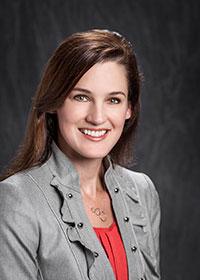
Gina Costello oversees the technology initiatives and special collections units in the LSU Libraries. Her responsibilities in technology initiatives include strategic direction and oversight of the website, application/software development, systems and desktop support, digitization, and digital scholarship. She manages a special collections department of 20 faculty and staff and is responsible for endowments of nearly $6 million. She was previously head of the Digital Services Department where she was responsible for the digitization of materials found in the Libraries and for collaborative digitization efforts within and outside the Libraries. She serves as the LSU Libraries contact for the Louisiana Digital Library (LDL). From 2009-2015, she was Project Director or co-director of the Digitizing Louisiana Newspapers Project, a National Endowment for the Humanities funded project through the Library of Congress.
Experience
Experience
Co-Principal Investigator, “…And 25 of our closest friends: The Louisiana Digital Library as Community-Focused Data,” January 2020-June 2021. Collections as Data: Part to Whole, Mellon Foundation re-grant. Funded $49,845.
Proposal author and Project Manager, Digital Scholarship funding support, 2016-2020. LSU Center for Computation and Technology and Office of Research & Economic Development. Funded $95,000.
Proposal author and Project Manager, “Digital Signage and Wayfinding in LSU Libraries” award from LSU Student Technology Fee Oversight Committee, March 2018-July 2019. Funded $30,800.
Proposal author and Project Manager, “Equipment for LSU Libraries’ Digital Scholarship Lab” award from LSU Student Technology Fee Oversight Committee, November 2015-June 2016. Funded $29,793.
Co-Principal Investigator, Project Ceres grant, “Louisiana Digital BibliAGraphy: 100 Years of LSU Agricultural Experiment Station Publications, 1888-1898.” August 2014-July 2015, $3,400.
Co-Author and Technical Partner, Mississippi Department of Archives and History National Endowment for the Humanities (NEH) National Digital Newspaper Program grant. September 2013 - August 2015, $95,470 (LSU sub-award).
Project Director, NEH National Digital Newspaper Program grant. September 2013 - August 2015, $210,000.
Co-Project Director, NEH-funded “Free People of Color in Louisiana: Revealing an Unknown Past.” May 2013-April 2015, $194,152.
Co-Principal investigator, Louisiana Agricultural Center Sugar Research Station-funded digitization of The Sugar Bulletin and other resources. Funded 2012-2014, $6,240.
Project Manager, Louisiana Board of Regents-funded “Building Digital Resources for Research: Creating a Digitized Collection of United States Army Corps of Engineers Publications and Related Historical Materials for Access and Preservation.” 2012-2013, $86,800.
Project Director, NEH National Digital Newspaper Program grant. Funded September 2011 - August 2013, $285,000.
Project Manager, Louisiana Sea Grant sponsored project to develop image and map collections in the Louisiana Digital Library. March - December 2010, $9,000.
Co-Principal Investigator, Louisiana Department of Wildlife & Fisheries-funded project to digitizeLouisiana Conservationist and associated titles. July 2010 - July 2011, $3,120.
Co-Project Director, NEH National Digital Newspaper Program grant. July 2009 -June 2011, $351,380.
Project Manager, Louisiana Board of Regents-funded "Louisiana Historical Newspapers: Preservation and Access." 2006-2008, $400,000.
Co-Principal Investigator and Project Manager, Louisiana Sea Grant College-funded project to digitize the Percy Viosca historic photograph collection. April-December 2007; $9,898.
Co-Author and Project Manager, Baton Rouge Area Foundation-funded project to digitize Margaret Stones watercolors collection. August 2006-January 2007, $8,900.
Education
Education
Doctor of Philosophy, Educational Leadership & Research, Higher Education Administration, Louisiana State University (LSU), anticipated 2022
Master of Science, Information Sciences, University of Tennessee, 2004
Bachelor of Arts, English Literature and Education, Mississippi College, 1997
Presentations
Presentations
“Exploring Leader-Follower Duality and Role Identity in Library Middle Managers.” ALA Core Forum, Baltimore, MD, October 8, 2021.
“Online Practitioner-Oriented Graduate Programs: Are they meeting the needs of new professionals?.” Mid-South Educational Research Association Annual Meeting, New Orleans, LA, November 6-8, 2019.
“Evolving Statewide Digital Libraries,” with Jason Battles, University of Georgia. Coalition for Networked Information (CNI), St. Louis, MO, April 8-9, 2019.
“Leading 21st Century Digital Design in 20th Century Library Spaces,” with Dr. Donald Gilstrap, University of Alabama. Designing for Digital Conference, Austin, TX, March 4-6, 2019.
“Evolving Leadership in Academic Librarianship and Challenges to a Sustainable Workforce.” LSU Curriculum Camp, Baton Rouge, February 22, 2019.
Moderator, “Sustaining Digital Humanities Centers” panel discussion. Digitorium, Tuscaloosa, AL, October 4-6, 2018.
“Digital Projects & Digital Libraries” Louisiana Library Administrators Fall Conference, Baton Rouge, LA, November 3, 2017. [Invited talk.]
“Peer-to-peer Learning to Advance Digital Preservation” with Barrie Howard, Library of Congress. Digital Library Federation annual forum, Pittsburgh, PA, October 25, 2017.
“Success through Collaboration: LSU Libraries and Graduate School Theses and Dissertations Migration Project.” Southern Miss Institutional Repository Conference (SMIRC), Hattiesburg, MS, April 13, 2017.
“Digital Preservation: From Identifying Content to Providing Access” .5 day pre-conference workshop. Louisiana Library Association Conference, Lafayette, LA, March 7, 2017.
Deep South Digital Preservation Outreach & Education Workshop, September 19-23, 2016, Jackson, MS. In collaboration with the Library of Congress [Workshop organizer.]
"Digital Libraries Research and the Future of the Louisiana Digital Library” with Rachel Tillay, Tulane University. Louisiana Library Association Conference, Baton Rouge, LA, March 9, 2016.
“Proposal Development in the Arts & Humanities” panel discussion for LSU Office of Research and Economic Development (ORED), March 12, 2015.
“Digitization Basics” at Louisiana Federal Depository Library Council meeting, Lafayette, LA, November 14, 2014.
“Digital Project Management Basics & Beyond” with Rachel Tillay, LSU Libraries. LOUIS User’s Conference, Baton Rouge, LA, October 16, 2014.
ORED sponsored Data Management workshops with Bill Armstrong, LSU Libraries. Spring and Fall 2014.
“Sweetening the Deal: A Digitization Partnership Between LSU Libraries and the LSU AgCenter Sugar Research Station” with Cristina Caminita, LSU Libraries. Louisiana Library Association Conference, Lafayette, LA, March 27, 2014.
“Digitization Crossroads: An Interdisciplinary, Cross-Profession Discussion” [Panelist.] Society of American Archivists Conference, New Orleans, LA, August 17, 2013.
“A Penny Saved is a Penny Earned: Ways to Maximize your Learning Potential in Tough Economic Times” with Kelly Blessinger at ACRL/LLAMA Spring Virtual Institute - “Doing Well by Doing Good”: Entrepreneurial Leadership for Librarians, April 21-22, 2010.
“Oral Histories from ‘Analog’ to Louisiana ‘Digital’ Library at LOUIS User’s Conference, Baton Rouge, LA, October 21-22, 2010.
"Digital Archiving and Digital Project Management” at Association for Conservation Information Annual Conference, Baton Rouge, LA, July 16, 2009.
“Creating and Managing Online Exhibits” Pre-Conference workshop (half day) at Rice University, Society of Southwest Archivists Annual Conference, Houston, TX, May 21, 2008.
Publications
Publications
Blessinger, Kelly and Gina Costello “The Effect of Economic Recession on Institutional Support for Tenure-Track Librarians in ARL Institutions.” The Journal of Academic Librarianship 37:4 (2011): 307-311. Costello, Gina R. “Digitization and Access of Louisiana Oral Histories: One Oral History Center’s Experience in the Digital Realm” In K. Ng and J. Kucsma (Eds.)
Digitization in the Real World: Lessons Learned from Small and Medium-sized Digitization Projects (2010) New York, NY: Metropolitian New York Library Council.
Costello, Gina R. and Alice Daugherty “Analysis of Job Responsibilities of Association of Research Libraries (ARL) Human Resource Professionals” In E. Pankl, D. Theiss-White and M. Bushing (Eds.), Recruitment, Development, and Retention of Information Professionals: Trends in Human Resources and Knowledge Management (2010) Hershey, PA: IGI Publishing.
Costello, Gina R. “Louisiana Coastal Wetlands and Louisiana Coastal Grey Literature: Vanishing Treasures.” Publishing Research Quarterly 23:1 (2007): 19-29. Reprinted from The Grey Journal.
Service
Service
Association for the Study of Higher Education (ASHE)
American Educational Research Association (AERA)
American Library Association (ALA) Core committee chair, member
Association of College & Research Libraries (ACRL) Rare Books and Manuscripts Association (RBMS)
Digital Public Library of America (DPLA) Community Representative
National Endowment for the Humanities (NEH) grant review panelist, 2007, 2015, 2021
Institute for Museum and Library Services (IMLS) grant reviewer, 2018
National Historical Publications and Records Commission grant reviewer, 2015







)
)
)
)
)
)