This website uses cookies to ensure site visitors get the best experience on our website. By continuing to use this site, you accept our use of cookies and Privacy Statement. To learn more, please visit LSU Privacy Statement.
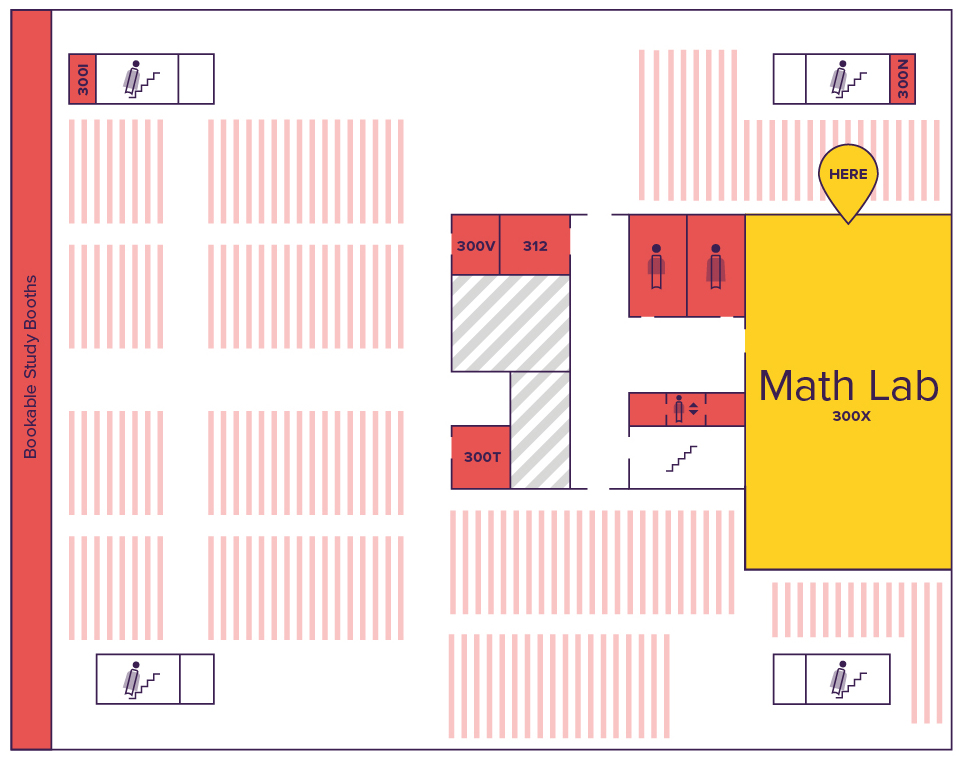
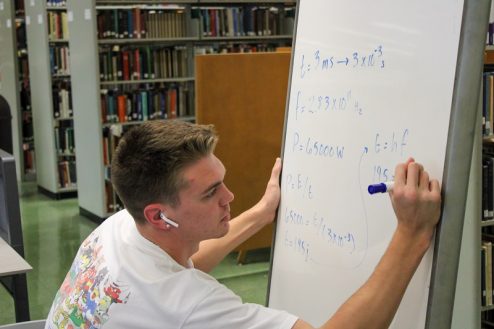
Math Lab Rooms located in the Main Library in rooms 300X and 300Y
Tile Cover
Link copied
Math Lab
https://lib.lsu.edu/spaces#mathlab
Tile HTML Summary
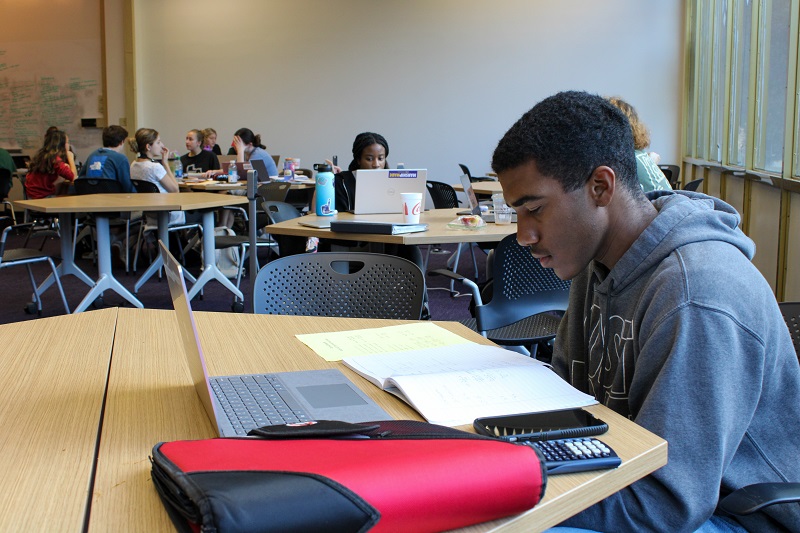
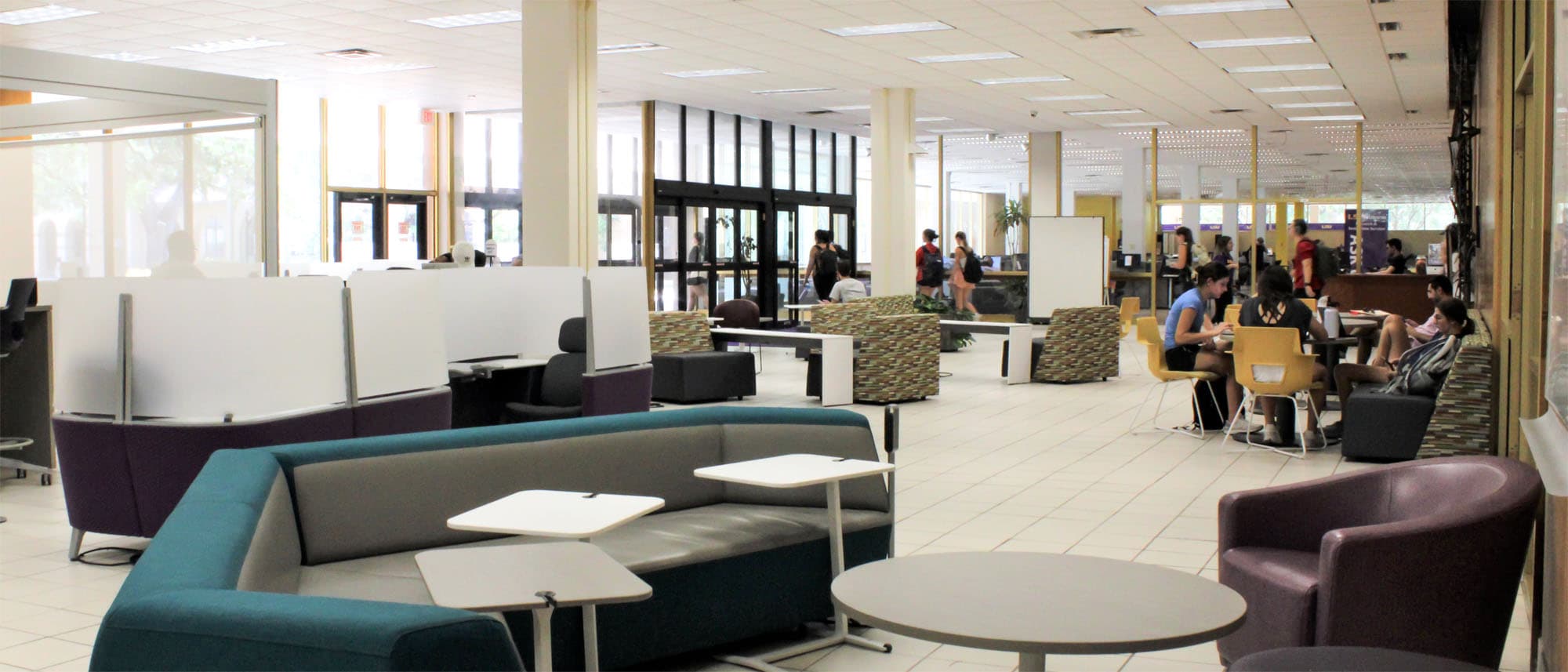
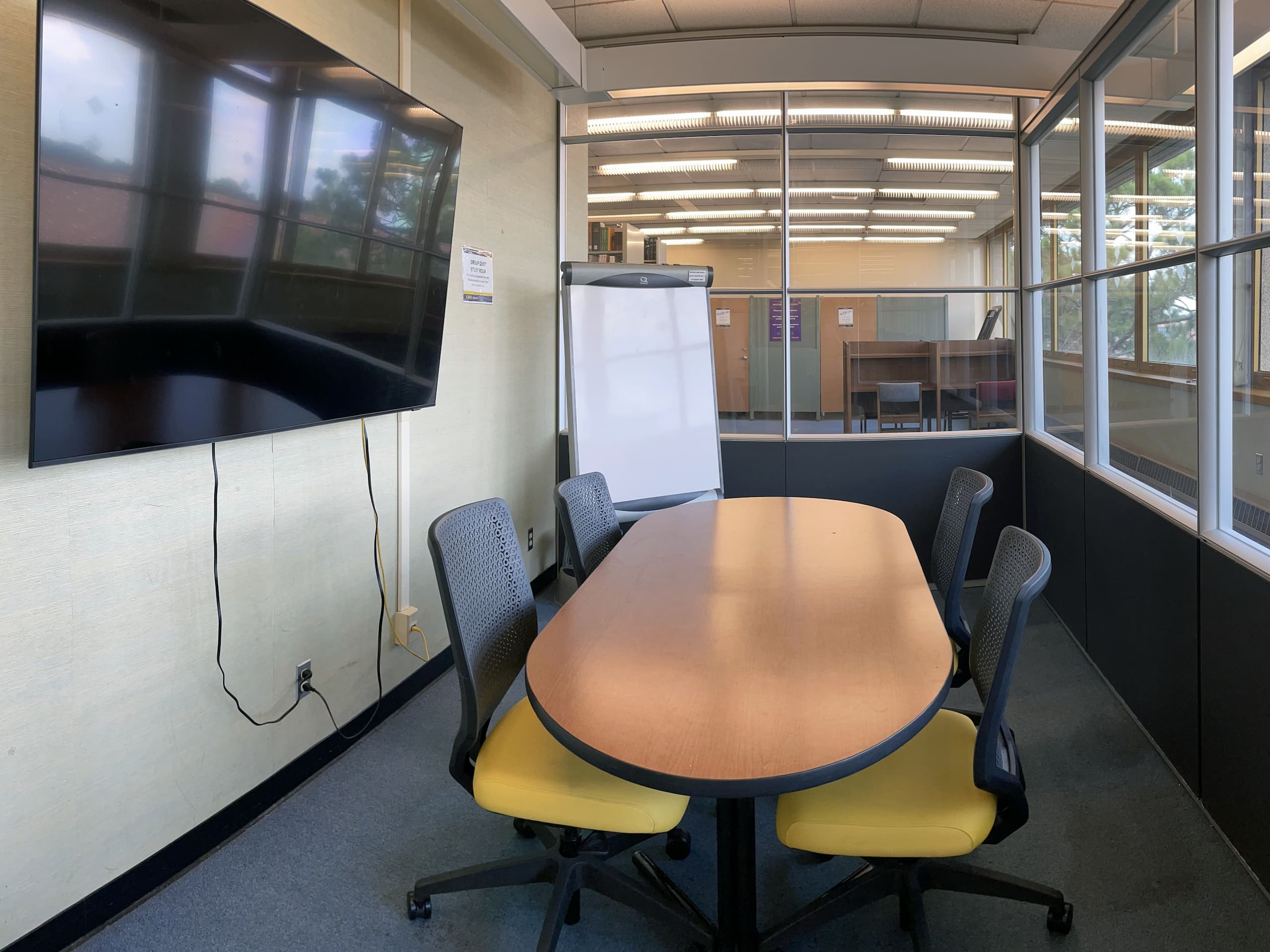
Math Lab Rooms located in the Main Library in rooms 300X and 300Y are explicitly reserved for students currently enrolled in MATH 1020, 1021, or 1022 and is brought to you by ITS and the Student Tech Fee.
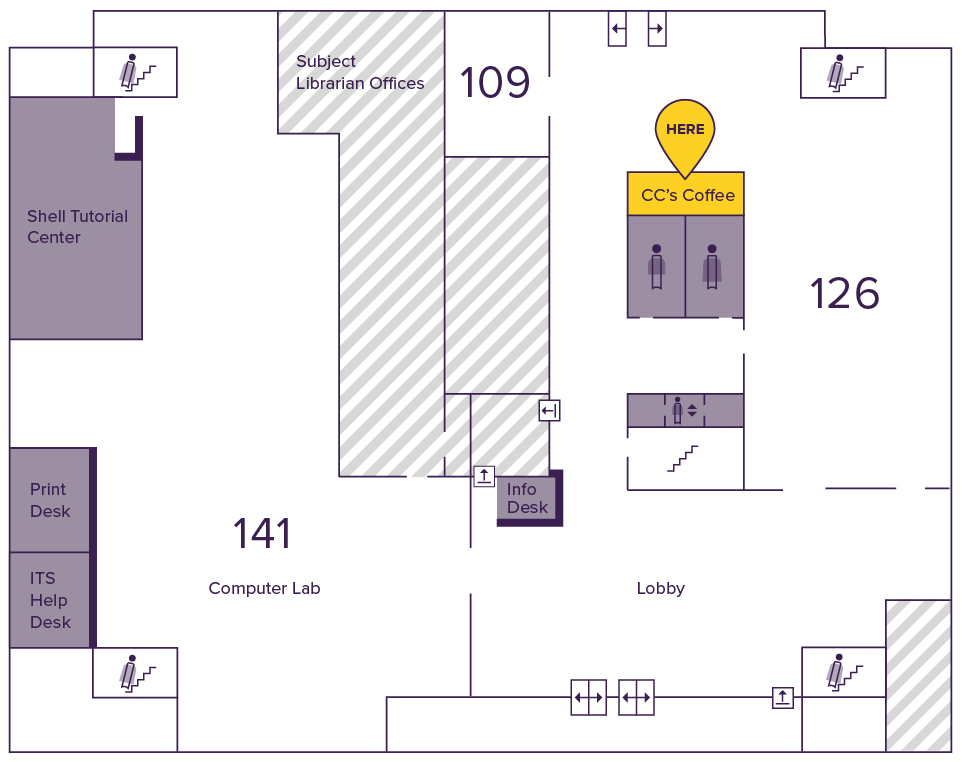
Located at the first floor of the LSU Main Library.
Tile Cover
Link copied
CC's Coffee House
https://www.ccscoffee.com/locations/lsu-library
Tile HTML Summary
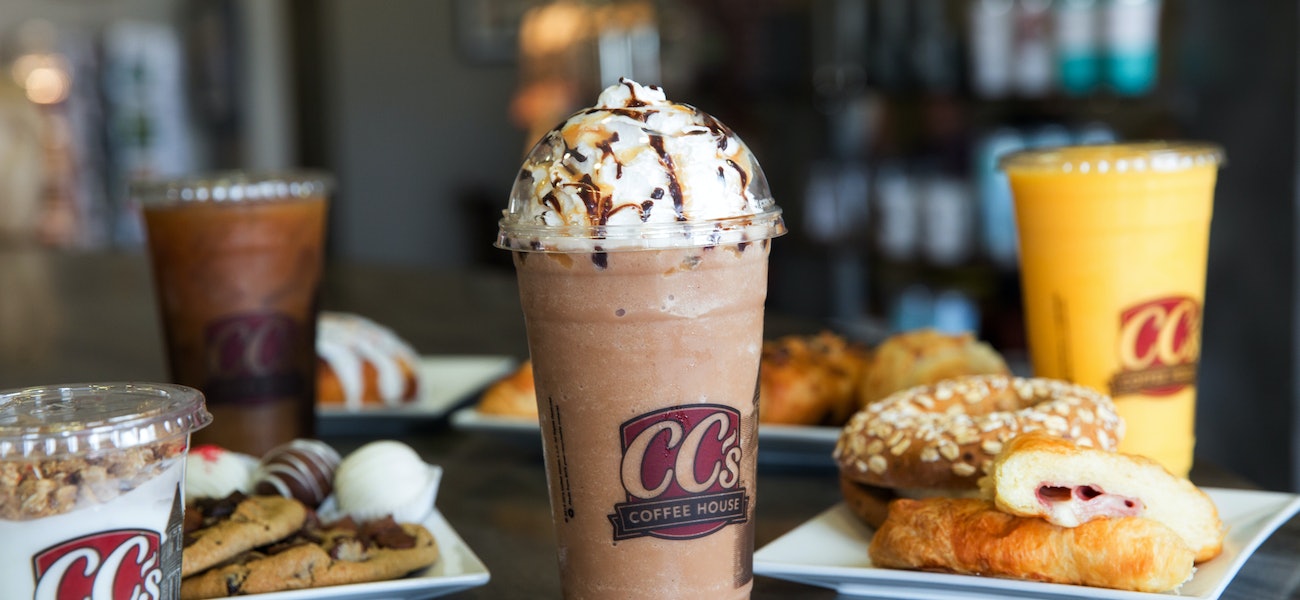
Louisiana-based coffeehouse chain selling a variety of brews & pastries in a relaxed setting. For CCs hours and information on LSU dining Dine On Campus || Hours of Operation.
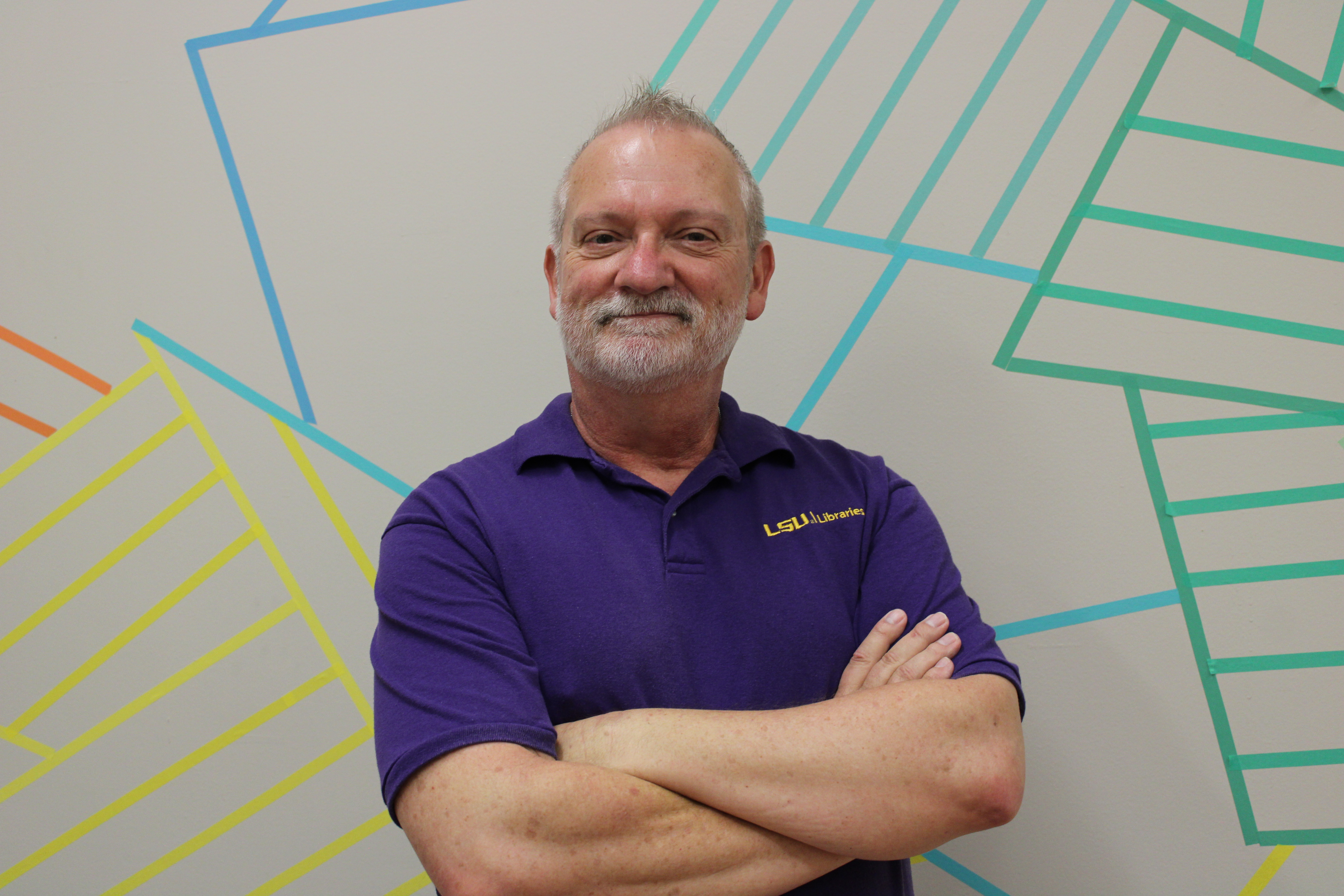
As Humanities and Social Sciences and Outreach Services Librarian I am responsible for the areas of psychology, sociology, communication sciences and disorders, communication studies and leadership and human resource development, as well as outreach to special groups, research, and instruction service. Also responsible for the area of education for the 2025/2026 academic year.
Experience
Experience
LSU Libraries, Associate Librarian, Humanities and Social Sciences/Outreach Services Librarian, July 2006-present.
LSU Libraries, Assistant Librarian, Reference Information Literacy Librarian, July 2004-July 2006.
College Hill Library, Front Range Community College, Westminster, CO, Reference Instruction Librarian, Oct. 2003-June 2004.
Norlin Library, University of Colorado, Boulder, CO, Reference Instruction Librarian, Jan. 2002-Dec. 2002
Semester at Sea, Assistant Librarian, Jan. 2001-April 2001.
University of Colorado School of Law Library, University of Colorado, Boulder, CO, Senior Instructor and Head of Public Services, Oct. 1994-Dec. 2001.
Schmid Law Library, University of Nebraska, Lincoln, NE, Associate Professor of the Law Library and Reference Librarian, Jan. 1987-Sept. 1994.
Texas State Law Library, Austin, TX, Library Assistant I, Sept. 1985-Dec. 1986.
Middleton Library, Louisiana State University, Baton Rouge, LA, Library Assistant I, Sept. 1983-Aug. 1985.
East Baton Rouge Public Library, Baton Rouge, LA, Student Librarian, Nov. 1984-June 1985.
Education
Education
Master of Library and Information Science, University of Texas, 1986.
BA, English Literature, Louisiana State University, 1983.
“Learning with LOUIS: Friends of the Libraries Panel Discussion” with Lora Amsburyaugier and Lillian Purdy on June 18, 2024. https://vimeo.com/969087907?share=copy
“Java Talk! Friends of the LSU Libraries Annual Book Bazaar Talk” on WAFB Interview on April 9, 2024.
“LSU Libraries and Research: Colloquium on the New Library Home Page for the School of Learning and Human Resource Development” on January 31, 2024: Youtube LSU Libraries & SLHRD
Fontenot, M. J., (June 2021) How Do We Increase Diversity (and What Kinds of Diversity) in an Already Robust LIRT Membership?, Other, American Library Association Annual Meeting, American Library Association Library and Instruction Round Table, Chicago, IL, United States.
Presented at the American Library Association (ALA) Annual Meeting in Washington, DC on June 21, 2019 on “Services to Veterans and Life Long Learners” as part of the Library and instruction Round Table (LIRT) preconference panel discussion on “TREMENDOUS! 3 Big Ideas for Marketing Library Services to Adults.”.
Coordinated and moderated a program on teaching emerging technologies and millennials for ALA Midwinter in Denver, CO on February 10, 2018 (25 attendees). “App-etizing Instruction: Practical Tips For Teaching Emerging Technologies”
Publications
Publications
Alia Kempton and Mitch Fontenot. “When Old Meets New: Two Louisiana State University Outreach Librarians Build, Work, and Learn Together to Support Collaborative Student Engagement.” 87 Louisiana Libraries, number 1, summer/fall 2024 pp.1-10
"Serving Our Student Veterans in Louisiana." With Rebecca Kelley, lead author, in 82 Louisana Libraries 4-12 (spring 2020).
"Going Where the Users Are: Three Variations on a Theme." With Emily Frank and Andrea Hebert in 80 Louisiana Libraries 6-9 (fall 2017).
"Conversations for Collaboration: Librarians and the High School to College Transition in Louisiana." With Anthony J. Fonseca, Debra Cox Rollins, and Kathryn B. Seidel in Informed Transitions: Libraries Supporting the High School to College Transition, Kenneth J. Burhanna, Editor. Santa Barbara, CA, Libraries Unlimited, 2013.
“Along a Continuum: Moving in Theory and Practice through the Collaborative to the Transformative in Teaching College and University Students to Use Government Documents in Research.” With Stephanie Braunstein, lead author, in Collaborative Librarianship 2(3): 147-153 (2010).
“Diversity: A Task Force Survey of the Literature and Some Possible Trends for Academic Libraries.” in 73 Louisiana Libraries 8-11 (summer 2010).
"How I Learned to Stop Worrying and Love Google and Wikipedia: Two Classroom Exercises and Some Musings and Trends" Chapter 17, pp. 297-308 of Teaching Generation M: A Handbook for Librarians and Educators. New York, Neal Schuman, July 2009.
"The Ambidextrous Librarian or "You Can Teach a Middle-Aged Dog Some New Tricks!" in Reference and User Services Quarterly 48:26-28 (Fall 2008).
"A Typical Year in Outreach Services at Louisiana State University Middleton Library." in 69 Louisiana Libraries 3-5 (Winter 2007).
"A Case for an Integrated Model of Community College and Public Use Libraries" Public Libraries 46 (July/August 2007): 46-49.
Awards
Awards
Recognition for Excellence Award, Front Range Community College Library, 2004.
Humanitarian Award, University of Colorado Law School, 1999.
Service
Service
American Library Association, 2004-
Association of College and Research Libraries, 2004-




)
)
)