Rich family heritage
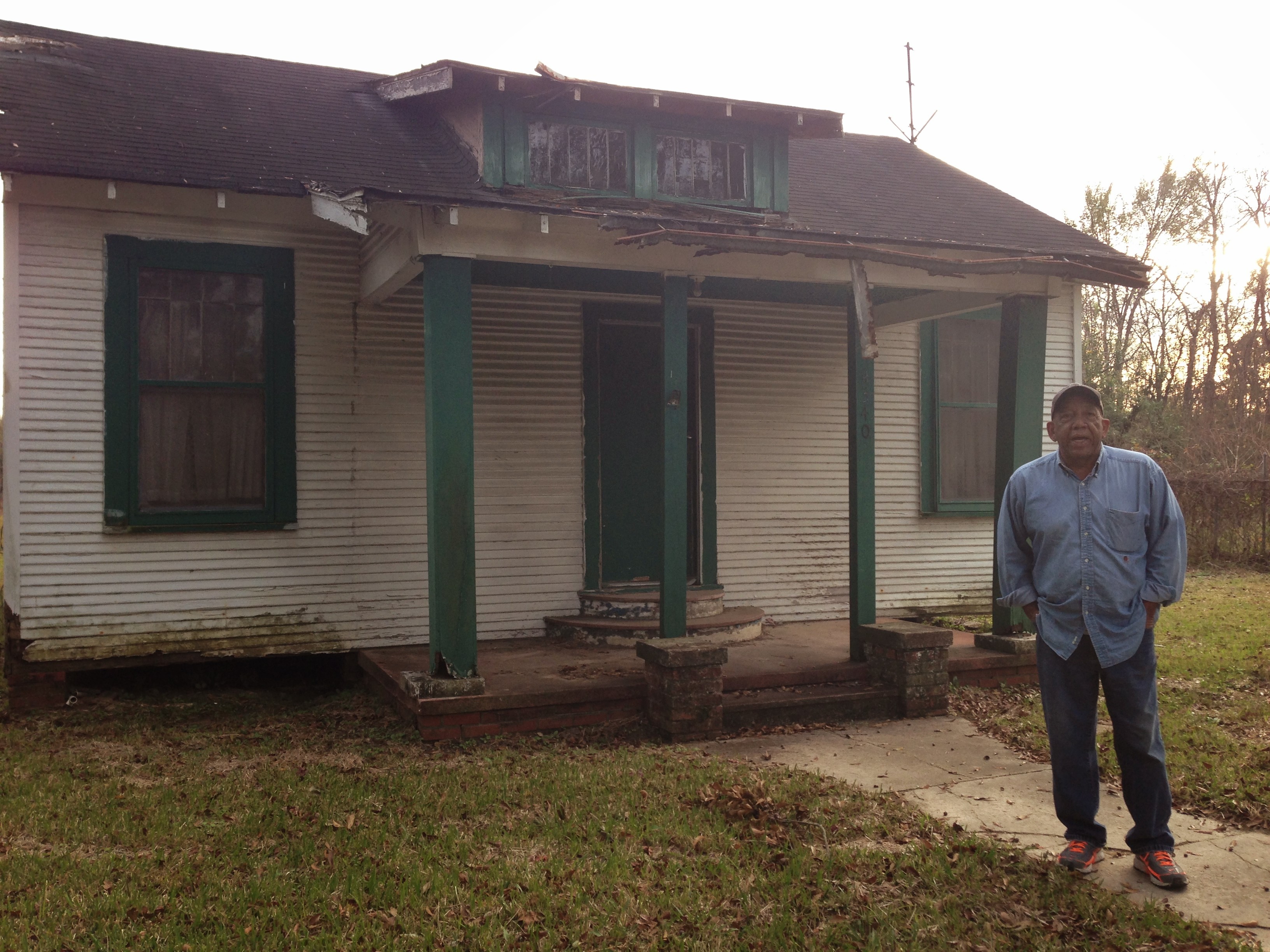
Edward "Butch" Lemelle Jr. by Jennifer Cramer, 2016.
EDWARD “BUTCH” LEMELLE JR: We'll start at my mother's mother was Ira Pots who married a David Duff Towner. So to kind of get you an idea, my mother was born in December the sixth, 1903. So that kind of gives you an idea of where the family come from. And just to give you a little history my grandfather . . . My mother said when she was a little girl my grandfather was the son of a former slave, and they were living somewhere in a little place called Kipling, Louisiana, somewhere around Sugartown, DeRidder [Louisiana]. And they migrated this way with horse and wagon. She was a little girl because she said they had . . . It had taken them three days to get from there to here. She said she could remember sleeping under the stars until they eventually made it here to the Mossville area. The old Evergreen Road up in that area, what now belongs to Sasol, was my mother and father's first home that they had, and their home burnt down. From what my mother says she was a little girl, and they moved up here on the Old Spanish Trail.
CRAMER: What kind of work did he get when he got here?
LEMELLE: My grandfather was more or less a self-employed person. He did a lot of things for himself. And my grandmother was a carpenter, she could do carpentry work. But my grandfather, he would do a lot of timber work, gardening, raise animals, and he used to take in . . . He actually sold coal. He would take different types of wood and he would burn it until it got down to a coal. He would cool it and the coal was used in homes. He either sold it or gave it to people. That's what they burned . . . The coal heaters and stuff.
My grandmother, now she was a . . . She could build a chicken coop, or a house, or whatever you wanted in an instant. And my grandfather was more or less the person that was the inside. He did the cooking and watching the kids and Grandmother would be doing . . .and from that my mother's had four brothers and all three, taking after their mother, was professional carpenters. They would get together; four guys would get together. They would put up the house. One could frame and box in. One was an electrician and did hard work. So you know, that's all I can remember so much about my grandmother and grandfather on my mother's side.
. . .
LEMELLE: My father went to work on an oil platform.
CRAMER: How old?
LEMELLE: When he was fourteen. My dad was born in [1908?] and he went to work on this platform at fourteen years old. My dad say one day at payday he had been working and what they would do, they would take your name down and you come up to the house to get your money. And the owner happened to see the name Lemelle, and she told the foreman to go bring that kid Lemelle to her. And when she brought him to the house she discovered that my father's family, Lemelles, was into their family from the wars. François Lemelle. She kept my dad . . . What they called then was the Big House and gave him a responsibility of helping her with her kids and around in the house. He raised Marie Belle Gardener. He raised her from a baby. When she was grown and got married to a David Garrison, he followed her. He worked in that family probably seventy years. True story.
CRAMER: Wow.
LEMELLE: Then he ended up coming to work for her here in Lake Charles. Raised her, raised her kids and her grandkids.
CRAMER: So that's what brought him this way, then?
LEMELLE: That's what brought him this way. That's what freed him from where he was at.


 This project is a collaboration between the Imperial Calcasieu Museum and LSU Libraries to document the
history of Mossville, a historic African American community in Calcasieu Parish, Louisiana.
This project is a collaboration between the Imperial Calcasieu Museum and LSU Libraries to document the
history of Mossville, a historic African American community in Calcasieu Parish, Louisiana.